

Table of Contents
The term “Luddite” has changed in meaning over the years. These days, it is a near-synonym for “technophobe”, someone who is afraid of or doesn’t trust new technology. It is often used to dismiss critics of the way technology is used as “backward” or “closed-minded”. But if we look a beyond the surface and examine the Luddite movement of old properly, we will find something much different. In this article, I will examine the Luddite movement and connect it to the ideology of the FOSS movement.
To start, a bit of history. The industrial Revolution lasted roughly from 1760 to 1840. This was a time of great social and economic upheaval, with many jobs being replaced by machines. Per Wikipedia:
“This transition included going from hand production methods to machines; new chemical manufacturing and iron production processes; the increasing use of water power and steam power; the development of machine tools; and rise of the mechanized factory system. Output greatly increased, and the result was an unprecedented rise in population and population growth. The textile industry was the first to use modern production methods, and textiles became the dominant industry in terms of employment, value of output, and capital invested.”

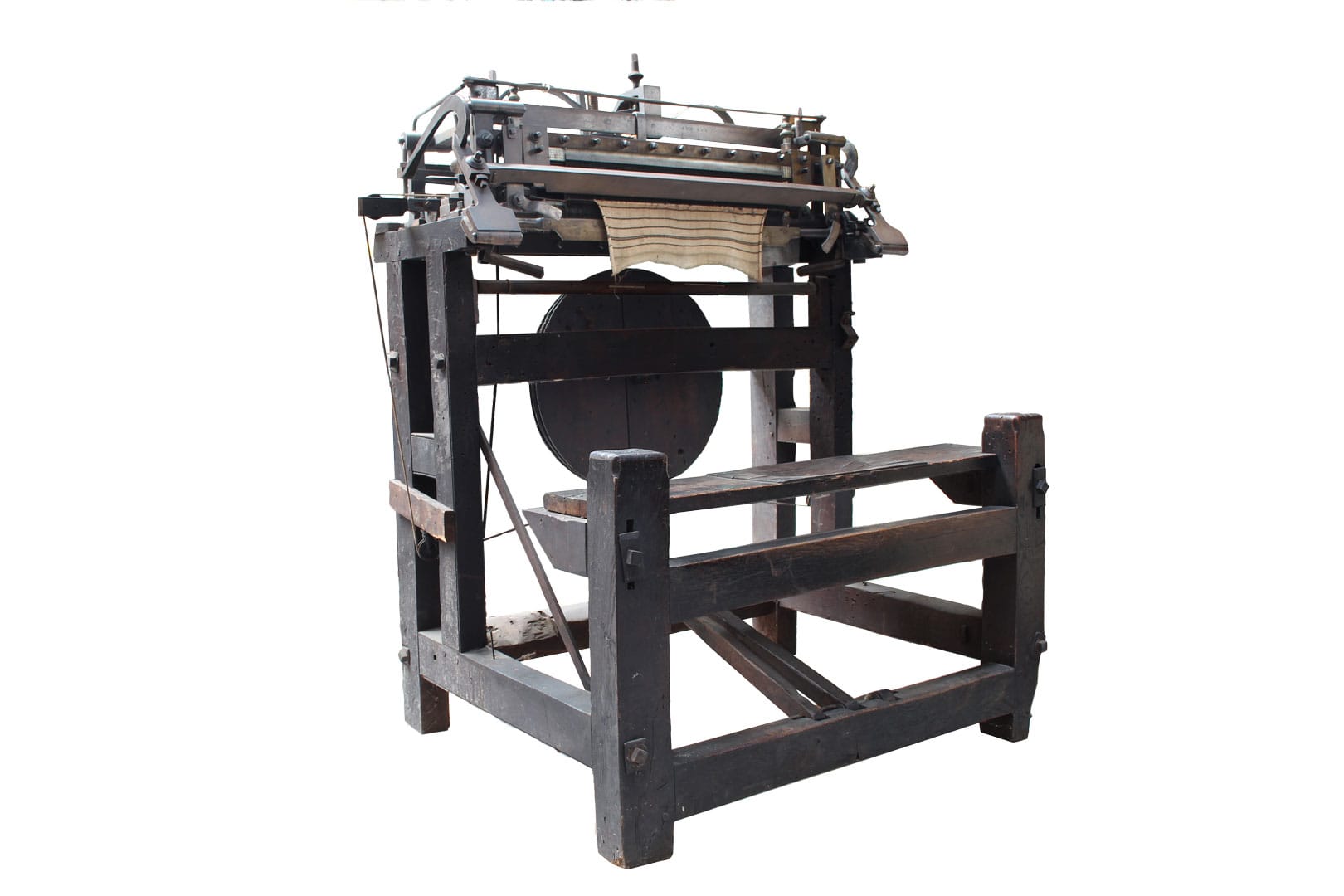
The fact that the textile industry was at the forefront of this, is important to the history involved. According to legend, around 1779, a weaver named Ned Ludd smashed two knitting machines in protest against the increasing industrialization. There is no independent evidence that Ned Ludd really existed, but the idea of him became a symbol of resistance. By 1811, the Luddites, as they now called themselves, were an organized and structured movement, going on raids, sabotaging machines and protesting the abuses of power in their industry. A cursory look at their surviving writings indicates that they were not afraid of the technology itself (in fact, many of them were highly skilled in using machines – very few people still weaved by hand). Rather, they were protesting the loss of dignity, the loss of pay, the declining quality of the product, and all the other nefarious things that were being pushed on them by the emerging capitalist class. One example of this is in an article in the Nottingham Review from 6 December 1811:
“The machines, or frames ... are not broken for being upon any new construction ... but in consequence of goods being wrought upon them which are of little worth, are deceptive to the eye, or disreputable to the trade, and therefore pregnant with the seeds of its destruction.”
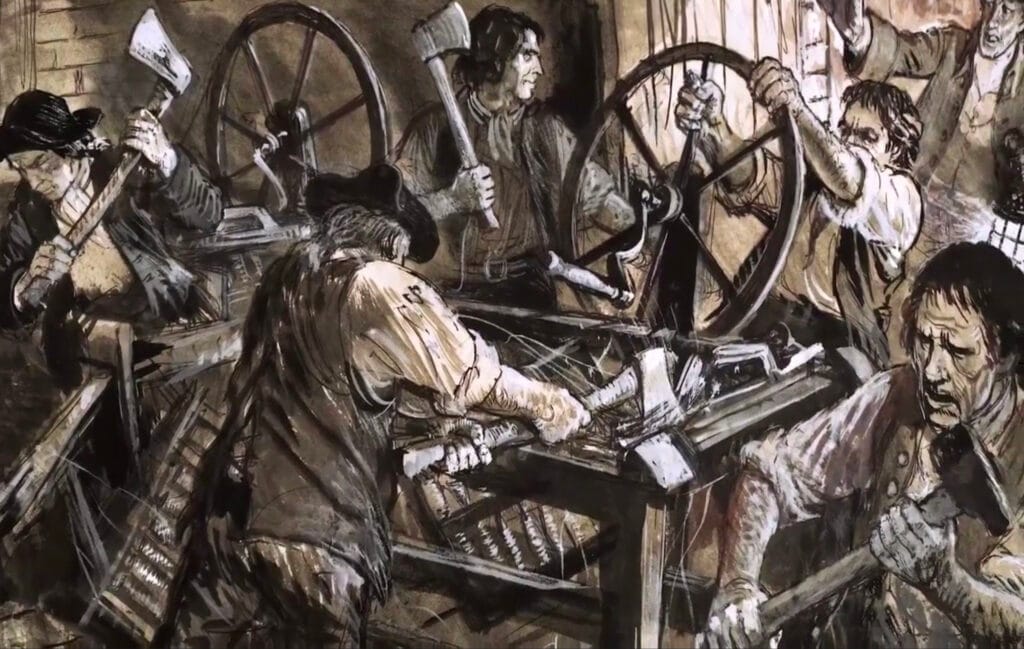
It is clear from articles such as this that the Luddites did not have issues of principle with the advancement of technology in and of itself; rather, they were concerned with how this technology was being used to control their output, their livelihoods, their very lives. Their issue was not with the machines themselves, but rather with those who wielded the machines as hammers, beating down the working class. This was not about some short-sighted stubbornness or a refusal to accept progress; this was about the dignity of labour.
This was about self-determination and agency.
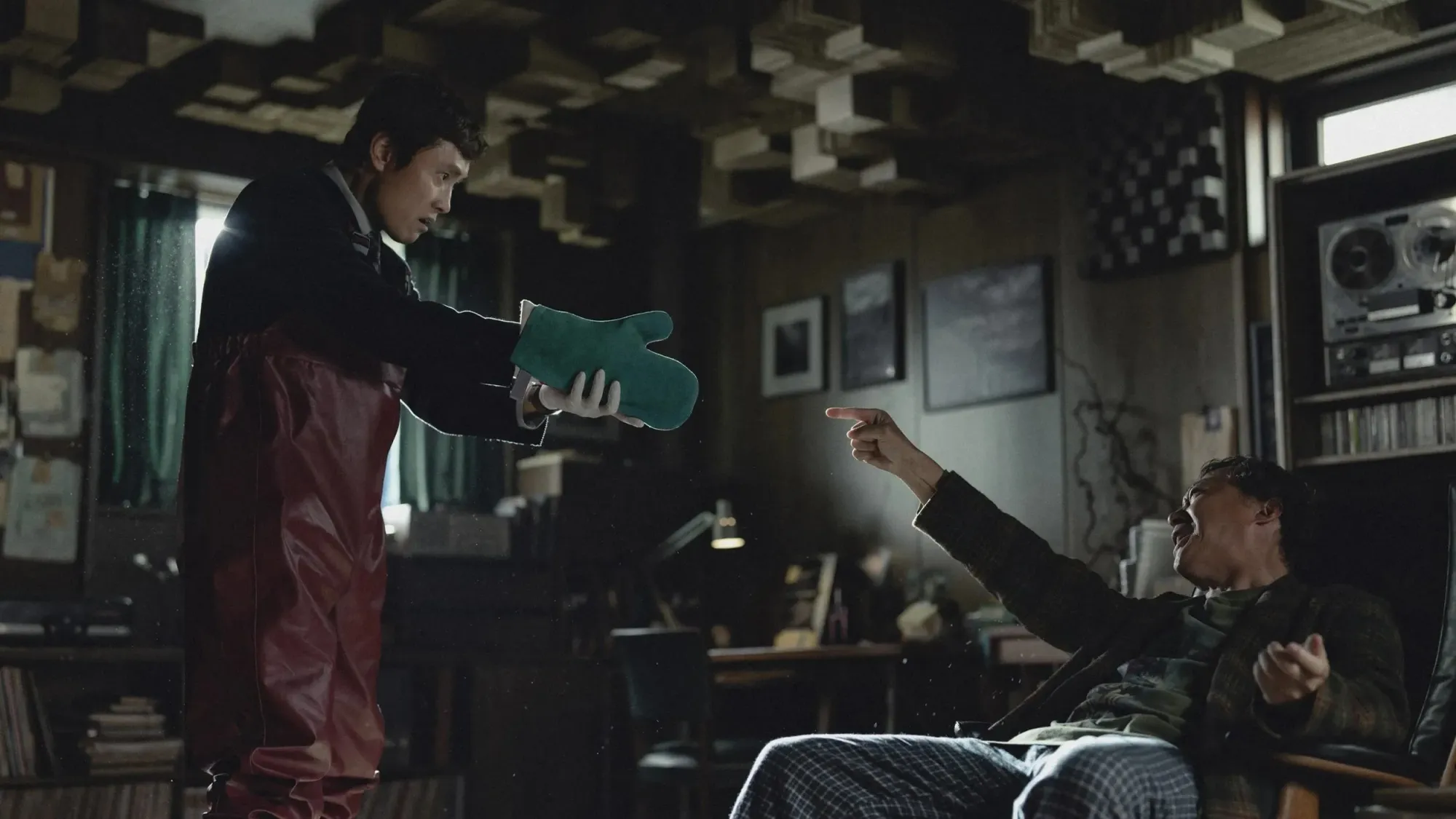
I don’t think it’s a massive stretch to connect this to the FOSS philosophy. In the modern day, we have no shortage of headlines about how the adoption of AI is threatening jobs, or game development companies laying off huge swathes of their employees. This is at the forefront of many people’s minds. As an example, take No Other Choice, the latest film from South Korean director Park Chan-Wook. The film deals with a man who loses his job due to downsizing and the adoption of AI, who then turns to desperate measures to find a new job. The thing is, the film is based on a book that was published in 1997. In the book, the issue is mechanical automation and the rise of computers, rather than AI. But the principle remains the same: technology is being used to oppress workers in the name of making a quick buck, with no regard for the human cost involved. So the director, Park, saw something in a book that is nearly 30 years old, which is concerned with the same issues that drove the Luddites to rise up over 200 years ago. All this to say, there is something universal, something almost inherent, in the human spirit and its insistence on dignity.
Apart from this, there is also the advent of the social media algorithm. We are being manipulated by Big Tech for our information, and our sustained attention. We are being milked and squeezed dry because it allows Mark Zuckerberg to buy another yacht, with zero consideration given to the notion of whether this is actually good for us, the users. In fact, there are several studies that claim to have found that excessive social media use can be quite bad for us. In a 2018 article in The Guardian, Mattha Busby explains how social media companies use similar tactics as slot machines to trick us into neurological addiction. The interface, the algorithm, the design language; all of these are carefully constructed to stimulate our brains in just the right way to keep us glued to our screens and give them more of our precious attention. Social media addiction is not a bug, it’s a feature. So, what can we do? What is a viable form of resistance against this creeping invasion into our professional and private lives? I argue that one way to push back, even if it is just a little, is simply to use Linux instead of a proprietary OS.

On 3 March 2025, The Conversation published an article titled, “Digital Luddites are rising. They want to democratise tech, not destroy it”. In this article, the authors have this to say about the Luddites and their connection to FOSS:
“Their rebellion was violently suppressed. But their core critique lives on: technology should benefit all of humanity, not a privileged few.”
In the article, the authors discuss three main strategies for dealing with the problems we face in the digital world, namely Resistance, Removal and Replacement. I will not delve too deeply into these three strategies here (Go read their article if you want to know more – it is a very good read), but it is not difficult to connect this to FOSS activism, or even the simple act of using Linux as an individual. When an individual chooses to use a Linux-based operating system instead of Windows or OSX, they are, deliberately or not, making a statement. They are declaring themselves to be autonomous and independent. They are rejecting the coddling, the hand-holding, the babysitting that our tech overlords want to subject us to. They are reclaiming their digital agency, their right to dignity and self-determination.
Beyond the personal and on to the societal, there are plenty of examples of FOSS activism with exactly the kind of motivations the Luddites had. Take for instance the Electronic Frontier Foundation’s new initiative, Take Back CTRL. The mission statement on their website says they are fighting for the following rights:
· Your right to speak and learn freely online, free of government censorship
· Your right to move through the world without being surveilled everywhere you go
· Your right to use your device without it tracking your every click, purchase, and IRL movement
· Your right to control your data, including data about your body, and to know that data given to one government agency won’t be weaponized against you by another
· Your right to do what you please with the products and content you pay for

If this isn’t in line with the philosophy of the Luddites, I don’t know what is. Dignity, self-determination, agency. That’s what it’s always been about. I’m not trying to convince you of anything with this article; I am not looking for converts. I am just trying to point out that the FOSS movement is not anything new, not really. It is just another manifestation of a drive that has been with us since time immemorial: the thirst for freedom.
For me, the conclusion seems simple: if Ned Ludd could see the modern world, he would not be smashing knitting machines. He would be smashing data centers. Not because he was afraid of them, but because he wanted people to have some dignity in how they interact with their belongings and their technology. He wanted people to be able to take pride in their work, and to claim ownership of their output. To conclude, I leave you with this quote from the Conversation article discussed above:
“Digital Luddism doesn’t reject innovation. It demands technology serve stakeholders, not shareholders.”