

Table of Contents
Politics is the science and art of organizing, constituting and managing a state and the direction of public life. Expressing these directions represents a power, a duty and an honour, and even though the common belief behind the political participation is that it is enough to vote during the elections, referendum and political initiatives to be part of the political participation niche, it is also possible to argue that there are multiple and diversified ways to make a political choice. One of the latter is the deliberate choice of the technology we use every day. And the everyday use of the technology starts from the personal computer and the operating system that runs on it. Operating systems not only shape and govern the way we interact with our material hardware but also the way we interact with institutions, private entities and peers.
Choosing an operating system means not only choosing the stack of our virtual life, but it also means adopting a particular perspective, prioritizing certain needs and choosing the way we interact with technology.
Making a political use of the technological power means choosing to change the direction of our computing life, gain consciousness on the alternatives and in a way that is equivalent to voting for a party or another, with the discussions, the drawbacks, and the advantages that come with it. This is the power of not letting others choose for us.
This power of choosing comes with the necessity of observing the alternatives, and if OS producers are like parties, each of these parties is bringing a priority or an issue to solve. Microsoft, Apple, RedHat and other vendors explicitly state the issue they are trying to solve: Productivity.
But other parties have other issues and other priorities, what if productivity wasn't the most important issue to solve for some? Are there any entities, producers, or institutions with other priorities that can drive the development of a distribution?
It is impossible to analyze the multiple implementations of the human perspective in this wide spectrum. Here, we tried to analyze the distributions based on the purpose that drives the development of the distributions. We hope it might entertain you and if we are lucky, even inspire you.
As of today, it is possible to clearly see a pattern and group OSes into four major families based on the purpose that drove the development of each of these software.
Military Purpose
Even if the productivity-oriented operating systems such as Microsoft's Windows and Apple MacOS are widely used in military organizations, most of them want to maintain a high grade of independence and control over the classified information, especially those who are not very supportive of the western world. A famous example is Astra Linux. Astra Linux was developed by the Russian Army and other intelligence forces. It provides data protection and mandatory access control, and as of now it is used by many educational, healthcare and state institutions as well as industries such as RZD and Gazprom.
Another focus of government institutions is information military defence where in a Cyber Warfare scenario having a robust and inaccessible OS creates a high advantage. This is the case of Kylin. it was created to make Chinese computers "impenetrable.", Kylin was developed by the National University of Defense and Technology in China. The first versions was based on FreeBSD with which it shared 99.45% of the similarities. It slowly proceeded to a more personalized grade with the newer versions, such as NeoKylin used by the government offices, national defense, energy and other sectors, as well as the 42% of Dell's personal computers in 2015.
In 2013 Canonical reached an agreement with the Ministry of Industry and Information of China to create the first Ubuntu-based OS, called Ubuntu Kylin OS.
But the OS distribution could not only focus on defending national security from the outside. Some institutional entities, having established a dense network of military alliances and defense mechanisms, consider it vital to have strict control over the population in order to avoid people's self-organization and free circulation of ideas.
Perhaps one of the most famous (or infamous) OS in this domain is Red Star Os. This OS was developed by the Korea Computer Center in North Korea. It has multiple controlling mechanism over the user, including a watermarking tool for tracing the spreading of a file from one computer to another, "antivirus" capable of removing censored files, a strange group called "administrator" which is the only one to have root privileges, and a mechanism able to detect the system's integrity and that checks that "certain files" have not been touched.
Software Independence
The military purpose is not the only need for a government; many other entities invest in software independence to cut costs and gain advantages over closed systems.
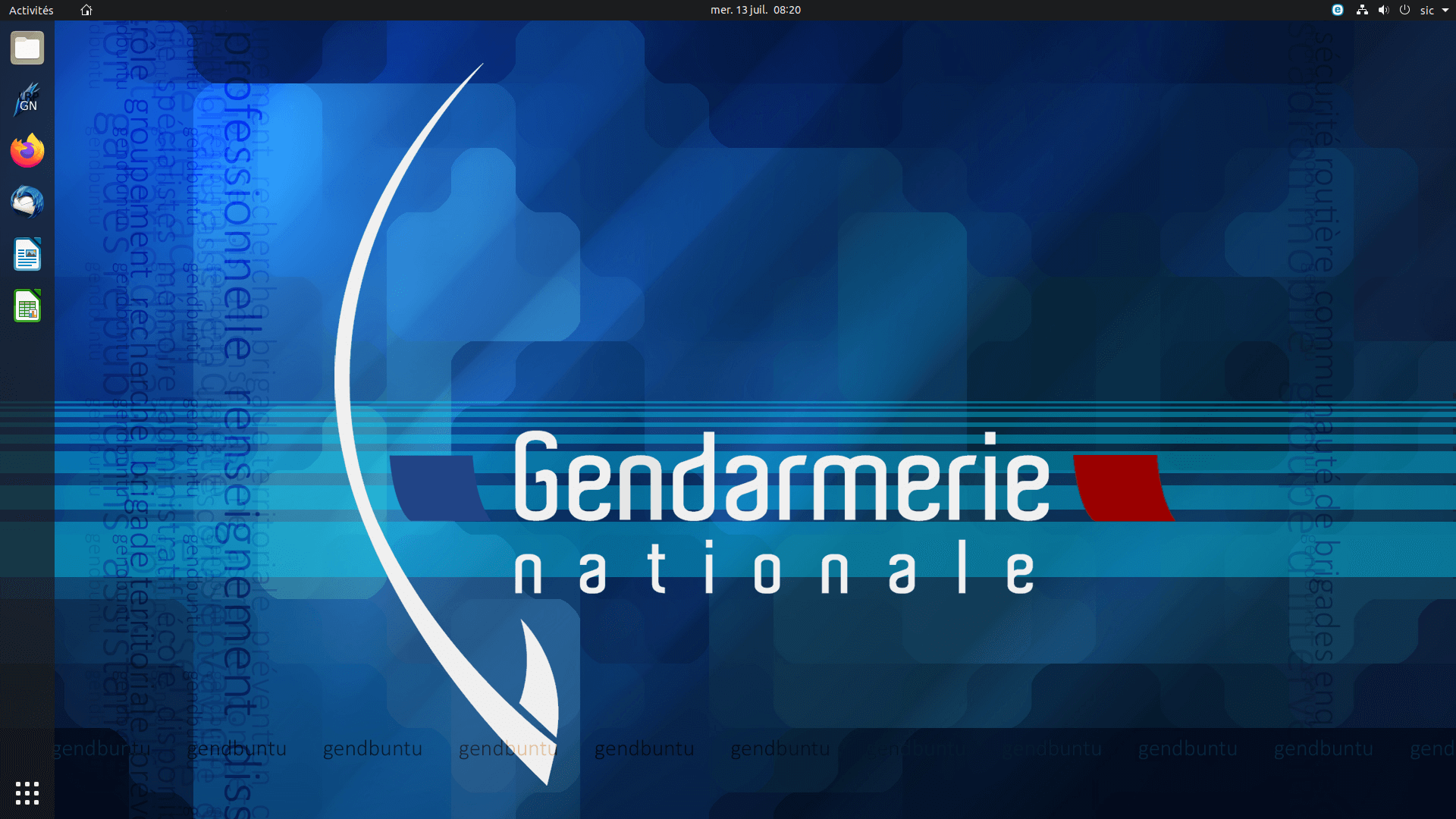
The advantages of having an independent Operating System are mainly related to the capability of the user not to rely on software governed by a third party, the possibility to autonomously develop the parts of the software that are needed and to better adapt to the necessity the software itself. This is the case of GendUbuntu. This operating system was developed by the French National Gendarmerie to become independent from US proprietary software after the end of the development of Windows XP and Vista by Microsoft. This solution cut the costs of staff training and licenses, and still saves the French Government the costs of buying computers with a proprietary OS. Most of the computers bought by the Gendarmerie do not have an OS and GendBuntu is installed by the Gendarmerie Technical Department.
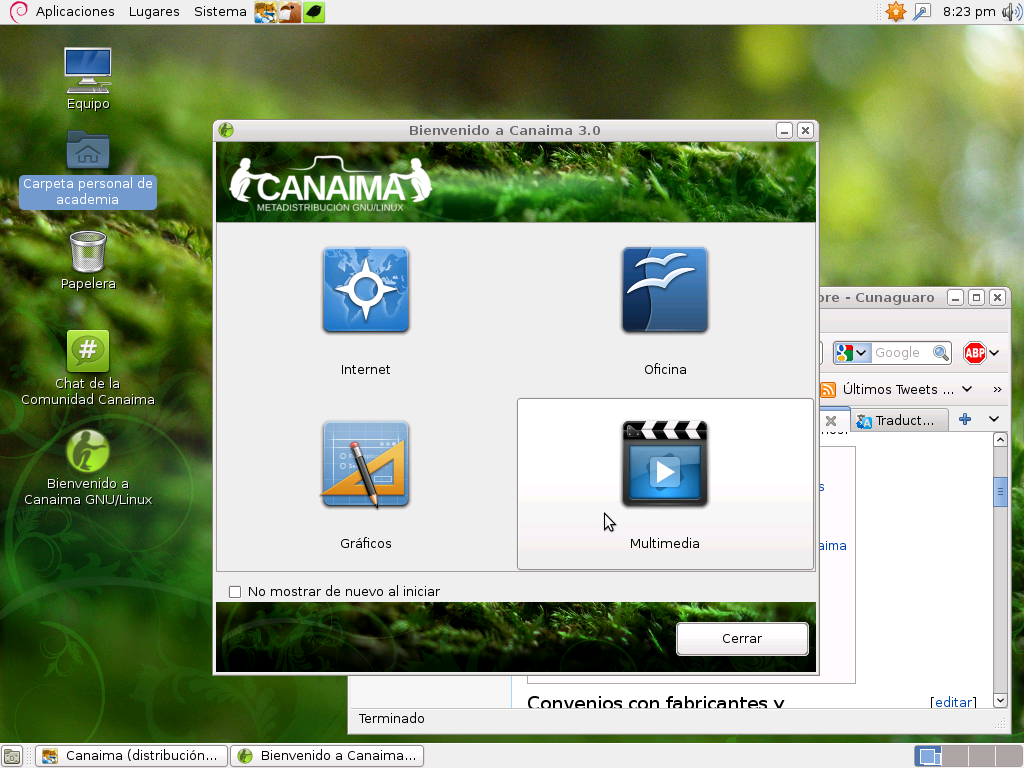
Some argue that another purpose of the free software could be the IT education and this is the proposal that brought the Venezuelan government to build Canaima Linux. Canaima Linux was created in accordance with the presidential decree 3390 of the Venezuelan Government. This OS is one of the most used in Venezuela, in particular, after the efforts done during the "Canaima Educativo" project were the goal was to provide school children with a basic laptop computer and with the basics educational skills in software utilization.
Canaima is now the default operating system for the Venezuelan public administration, and it is also the most used Linux distribution in Venezuela, thanks to the widespread adoption of the distribution by the public schools.
But the adoption of FOSS software in public entities wasn't always successful. An example of this is LiMux. LiMux was developed by the city of Munich in order to replace the software on its desktop computers and abandon Microsoft Windows. During the development of LiMux another software called Wollmux was developed to extend OpenOffice capabilities in areas required by the Munich Council, including managing letterheads, templates, and saved blocks of standard text. Unfortunately, OpenOffice received much criticism for its productivity shortage, so the administration considered returning to Windows software. The spokesman of the Munich city council argued that those productivity problems could have been solved by switching from OpenOffice to LibreOffice, but the city council had already decided.
Another purpose of the Independent Operating systems if often fight back against embargoes and limitations from producing countries. The Cuban government began the development of Nova Linux just after the beginning of the US embargo and it was developed in Havana by the University of Information Science by students and professors. The emphasis was particularly drawn to the FOSS aspects of the project with the Director of the University stating: "The free software movement is closer to the ideology of the Cuban People".
Research
The creation of a research-oriented OS always drew a keen interest among the Open Source community. Usually, research-oriented distributions contain necessary software and optimization specifically designed for a particular area of research.
Some examples are Scientific Linux, which focuses on High Energy Physics (its firt name was HEPL or High Energy Physics Linux), which was developed starting from FermiLinux, a Linux distribution developed at FermiLab, Chicago and then enhanced by CERN, DESY and the ETHZ of Zurich.
Another OS developed by the Chinese Academy of Sciences in 1999 was Red Flag OS, built with the aim of serving the Chinese research community with a research-focused OS that could substitute Microsoft's distribution.
Unfortunately, it never reached a wide computer population.
Other distributions started as research platform and quickly gained popularity among wider communities, an honorable example is Kali Linux, which was designed as a Cybersecurity Research platform and it quickly gained popularity as a penetration testing and digital forensics tool.
Hardware and Software Ownership
These are only some of the purposes that drove the development of some distributions, but possibly the most widely and recognized reason not to use proprietary software is the possibility of having more control over the hardware and software of the computer. For this reason many user centric distribution were developed. Some are easier for the user to be managed, like Ubuntu, Fedora, Manjaro and Debian and some less, like Arch and Endeavor. The idea behind the complete ownership of the computer is that once a product is bought, the producer should not have any right over what it is executed on it, whether it is the data or the software. Computers are almost always shipped with a predetermined operating system, limiting the choices of the user and proposing a boring and standardized use of technology. Some argue that the choice of the operating system by every user would make the management of computers more difficult and problems more complex to solve, we argue instead that giving the user the right to choose the operating systems would make people more capable of comprehending their power, gain consciousness over technology and being self sufficient in the reparation of it, creating a less dependent society and a democratization of the knowledge on the technology.

The wide variety of human needs and ideals brought to the creation of a colored spectrum of Operating Systems and distributions, and even though the adoption of many of them could not be wide enough to call them "popular" it is still possible to say that each of them deserves a certain attention, whether to escape from a boring afternoon on a virtual "testing" machine or to escape the monotonous use of the computer, relegated to just being objects with the sole and only purpose of the productivity instead of seeing each program as a projection of the human need.
In a way we can say that if art is the proof of human existence on this earth, then computer programs, operating systems, languages and compilers are little forms of art.