Table of Contents
Today, someone shared with me an article by Josh Griffiths titled "YouTube is Awful. I'm Not Posting There Anymore". This made me instinctively roll my eyes, but I had no good reason to be skeptical, and Josh does have some solid arguments to make.
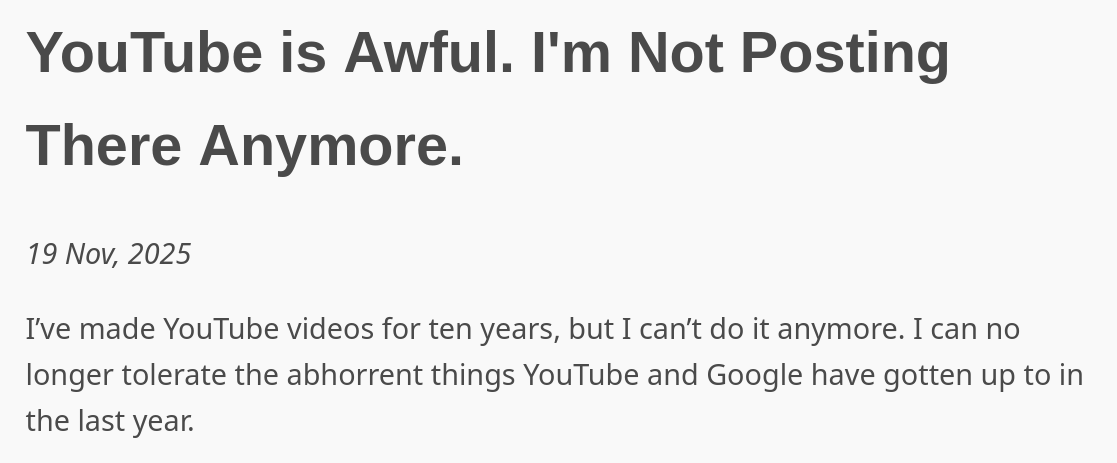
As we will see now, YouTube can easily be seen as awful. And yet, I have decided to make this video, and many more; even worse, I still feel a strong gratitude and affection for this platform: why?
YouTube indeed is awful
Let's start with the strongest argument against YouTube presented by Josh. He says,
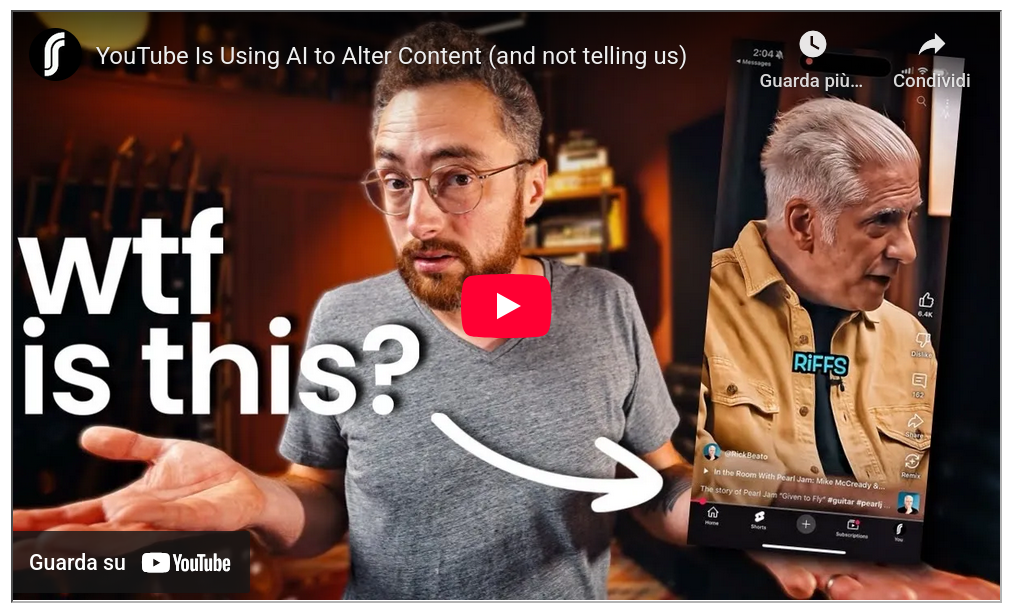
In August 2025, two creators discovered YouTube was using AI to alter their videos without their consent, and without telling them.
He's referring to Rick Beato and Rhett Shull, who each have channels with millions of subscribers. Beato compared short-form content that he shared on YouTube as a Short and on Instagram as a Reel, and found out that the former had the classic look of AI-generated content, even though it was real.
Rene Ritchie, creator liaison for YouTube, confirmed on Twitter that YouTube was running "a small experiment on select Shorts, using traditional machine learning to clarify, reduce noise and improve overall video clarity – similar to what modern smartphones do when shooting video".
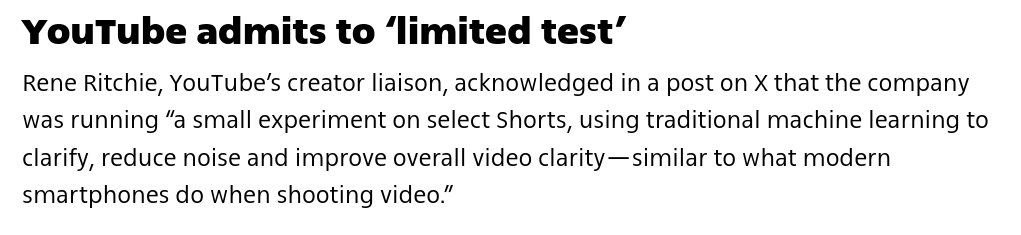
On one hand, he's unfortunately correct: I have a habit of using the "pro" mode on my Honor smartphone, as that's the only way to avoid AI-based upscaling to be visible in busy parts of the image. It is similar to what modern smartphones do when shooting video.
However, this is something that can easily damage the brands of the people whose content you are modifying. I do not you any AI tools to do these videos, and I'm certain that - if I did - I'd receive a fair amount of pushback from my audience. The idea of YouTube replacing the look of my videos to add AI-generated artifacts, without telling me, is truly awful.
As Josh says,
They’ve opened Pandora’s box; they’ve told the world that they can and will edit videos after they’ve been uploaded, and will not tell creators or viewers. You can’t trust anything you see anymore, even from creators who adamantly do not use AI. Sure, it’s “just” an AI smoother today, but tomorrow they could put an ad straight in the video, or remove something they don’t like.
Furthermore, YouTube is taking part in the general swing to right-wing politics made by most major tech companies after the re-election of Donald Trump.
They (unnecessarily) agreed to a settlement of $24.5 million, and $22 million of that will directly go towards the construction of the famous Ballroom. The remaining will be paid to the American Conservative Union and other parties involved in the case, such as conservative writer Naomi Wolf.
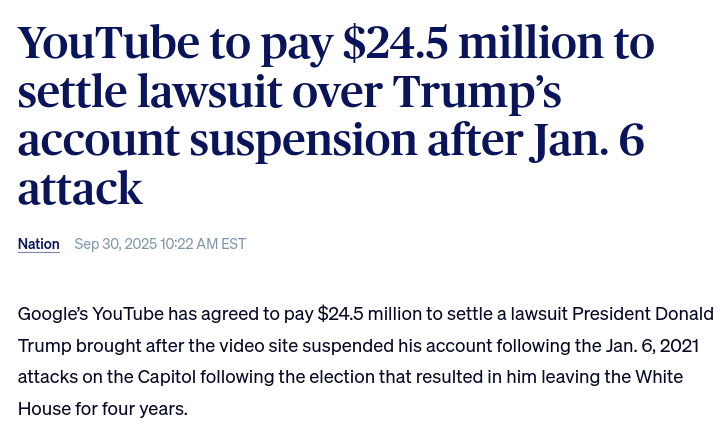
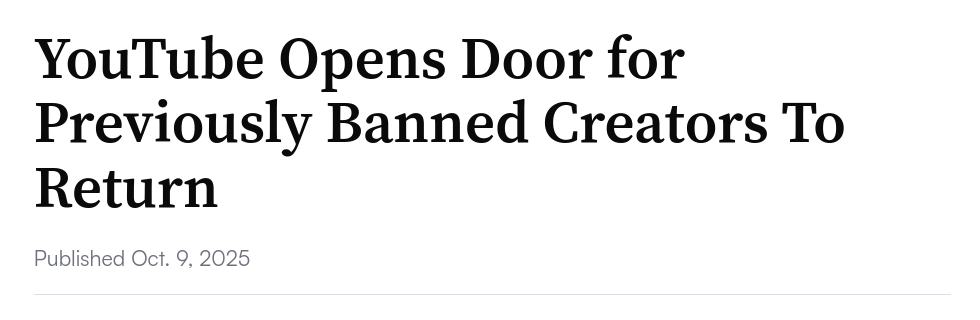
And, of course, they chose to reinstate Donald Trump's YouTube account (which was banned in January 2021); they also rolled out a program to allow previously banned channels to "rebuild their presence on YouTube", and this move was also seen as a way to align with the Trump administration: the fear is to see brought back many of the channels that were banned for spreading misinformation.
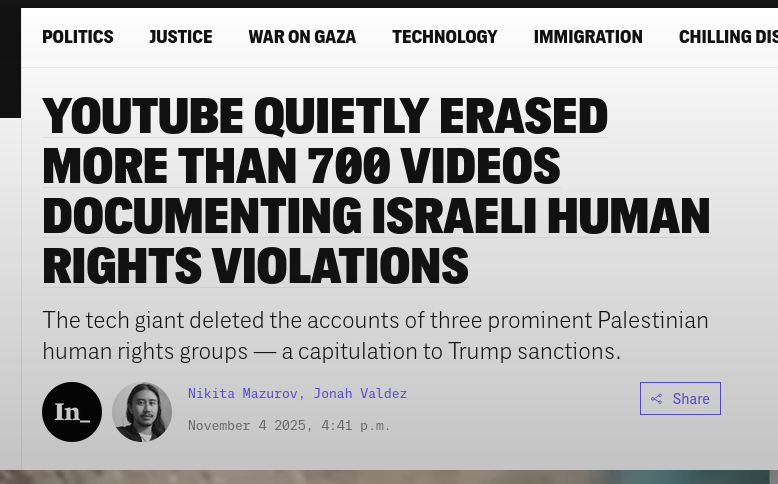
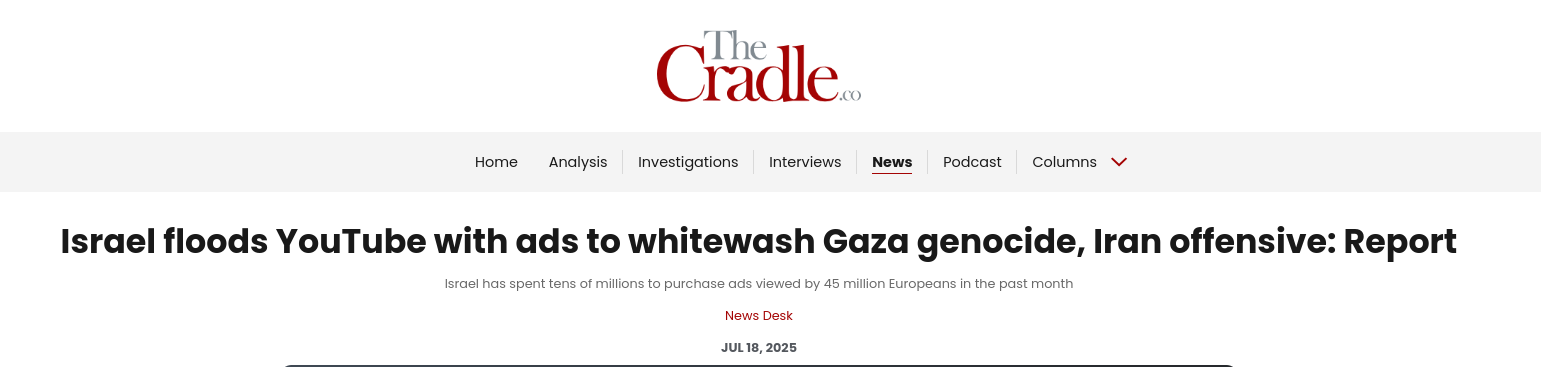
At the same time, YouTube is taking a hard stance against videos attacking Israel for the genocide it is committing in Gaza. As an example, journalists Nikita Mazurov and Jonah Valdez reported that YouTube removed over 700 videos documenting Israeli war crimes and human rights violations in Palestine.
At the same time, YouTube is running great amounts of Israel propaganda, which contains many factual inaccuracies that are being ignored by the company. It's easy to see a double standard being applied here.
These are, in my opinion, the worst behaviors that YouTube is currently showing to the general public. There are a few more points that Josh is making, though I don't agree as much with them. Nonetheless, for intellectual honesty, let me go through them.
Firstly, YouTube is very aggressively cracking down on ad blockers. According to Josh,
YouTube chose not to take prisoners, and they didn’t care about innocents caught in the crossfire. Not only did they disable videos for anyone using any ad blocking program, they also disabled videos for a lot of people who didn’t use any.
YouTube more recently shut down one remaining loophole in Firefox to maintain ad blocking, and they decided to enable "Automatic Ad Place" on all videos, retroactively.
Creators have two ways of putting ads in videos – they can place them manually or automatically. If you choose the automatic option, YouTube will place about two or three ads every minute. Placing them manually meant I could put one or two in the whole video, depending on how long it was. But starting in March 2025, they automatically placed ads on all my videos, newly uploaded ones AND old ones. You are able to turn these ads off, but only individually by editing the videos one by one. I spent hours going through my backlog of videos disabling ads I didn’t place.
Furthermore, YouTube is integrating AI tools within the Creator Studio. You are now suggested AI-generated video titles you should work on, and it even proposes to generate the entire script, a voice-over, and a thumbnail.
Here's what YouTube is proposing for me! If I click one of these cards, I'm given a button "develop this idea", which generates a hook, a structure, and thumbnails. All of this is fully AI-generated.
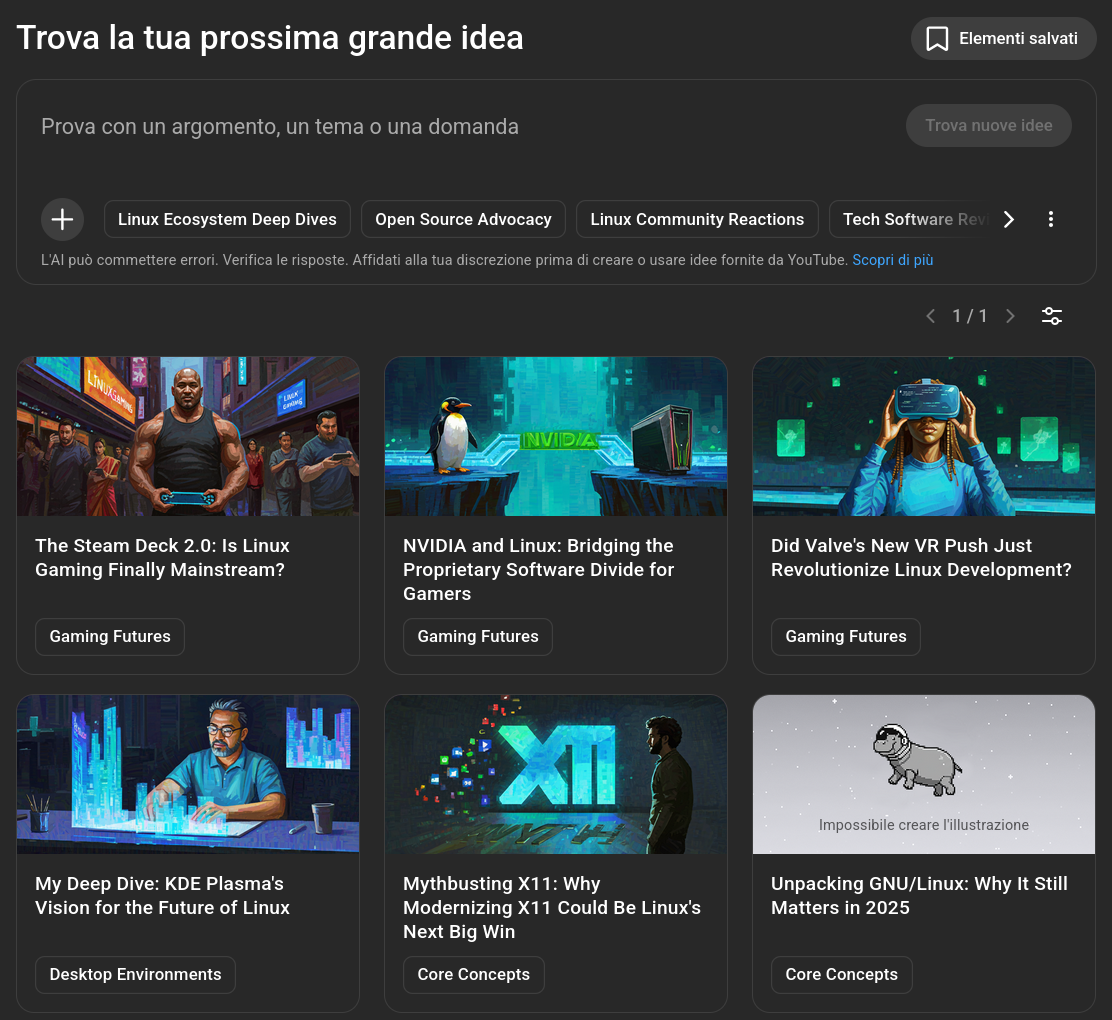
And they're bad. I'm happy to report that I only discovered this feature whilst researching for this article, and I'll probably never make use of it again.
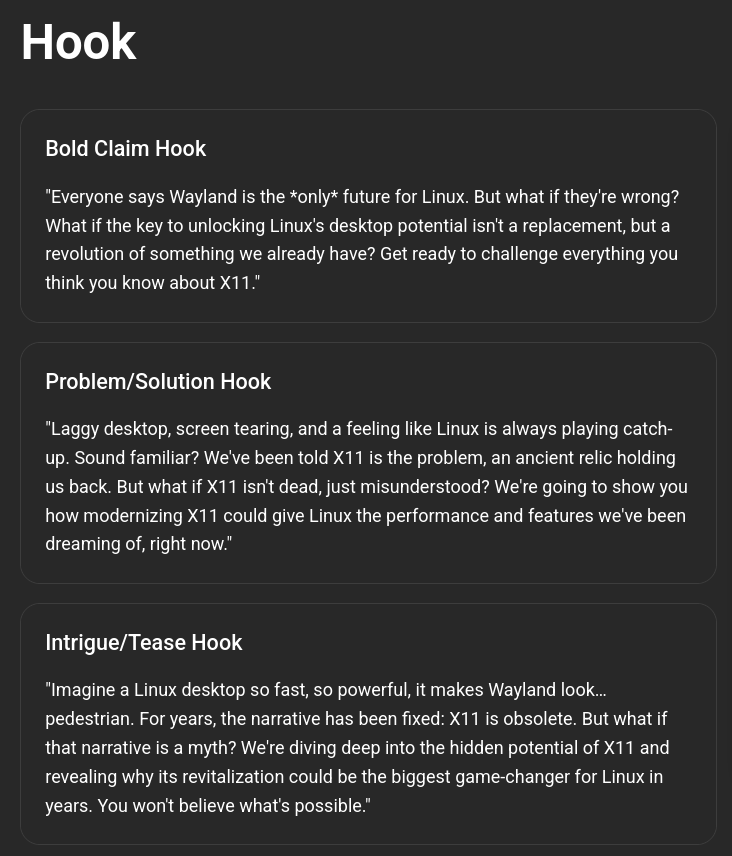
Of course, this is entirely opt-in for creators. However, Josh claims that this is still part of the general enshittification of YouTube, as it will make it easier to generate low-effort AI slop that will slowly take over the platform.
Note that Josh says:
[This means that] YouTube is absolutely taking all of my videos and using them to train their AI without my consent.
And, err, we already knew that large language models are trained on YouTube videos, years ago. I wish we could stop looking so surprised when we "rediscover" widely known facts! But of course, his point still stands.
Due to all of these reasons, which you can read more extensively on his blogpost, he has decided to quit YouTube and start uploading his videos exclusively to Peertube instead.
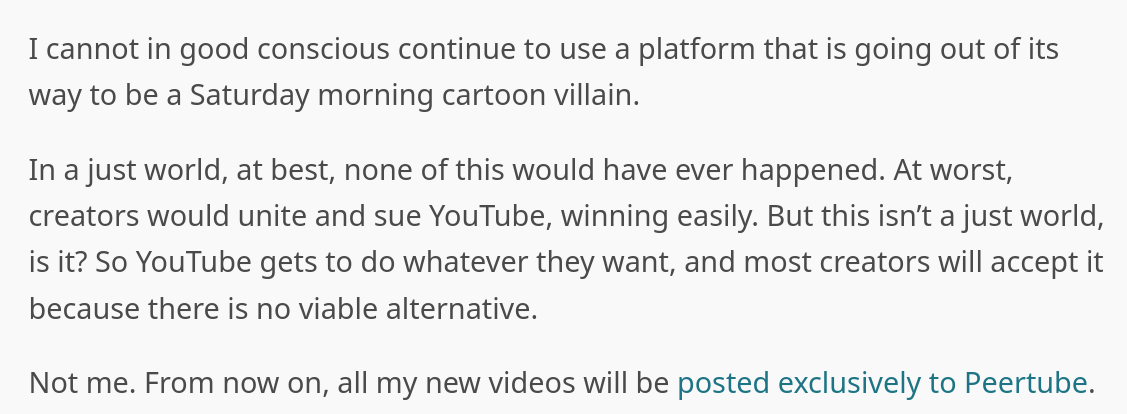
This is a completely reasonable choice, and I will not criticize him for it. However, there are a few things he said to justify this transition that I would like to criticize.
YouTube and monetization
Firstly, let's talk about ad blockers. I'm not going to come here and tell you that you shouldn't be using ad blockers, but their usage on YouTube has some significant drawbacks.
Let me tell you, doing videos takes a shitton of work. Which is why half of all the earnings that YouTube makes through advertisements is shared with the creators. There's a misconception that we only get a small portion of that ad money, but we get half; so, by using an ad blocker, you are damaging us creators, as much as you are damaging YouTube.
Even worse, since I make videos about Open Source, and Open Source fans are more likely to use ad blockers, it means that making videos about Open Source is inherently less profitable. If I spent my time covering proprietary software, or doing book reviews, or talking to any other audience, I'd be making more money out of it.
Think of the incentives this creates: if you're part of a community that uses ad blockers more often and frequently, then content that will be interesting to you is inherently less profitable to make, and we're not talking about profit margins, but it makes the difference between being able to make videos about a certain topic and not being able to.
This is why I push so hard for paid subscriptions and donations: I have very low revenue numbers compared to the amount of views and watchtime I get, and making videos is not free, so I have to seek money elsewhere. And, honestly, it's barely working!
And, by the way, I'm not telling you not to use ad blockers. Even worse, I publish all of my videos, without advertisement, on both PeerTube and Odysee for everyone to watch, so that you don't have to compromise your privacy. I'm just saying: using an ad blocker has its benefits, but it also has its drawbacks, which are often ignored.
When asked whether he will continue watching YouTube videos, Josh says the following:
YouTube, unfortunately, still has a tight stranglehold on the online video community. There are dozens of video creators I watch that upload only to YouTube, Nebula, and Patreon. I’d love to support them all on Patreon, but I’m a writer and grocery store worker, I don’t have that kind of money. So I myself use adblockers, in fact I started using FreeTube and PipePipe recently, which gets rid of all ads and sponsorship segments. This cuts YouTube out of the equation completely and I still get to watch my favorite creators.
You're not cutting YouTube out of the equation completely. You are cutting YouTube and the creator out of the equation. Again, by doing this, you are making it harder to make a living by making the kind of videos that you like.
He goes on to say:
When I was still posting videos on YouTube, I was okay with my audience using ad blockers. I recommended it, even. If I had to chose between making a thousand dollars and only five people watching my video, or making five dollars and a thousand people watching, I’d take the latter. And if a creator has the mindset of the former, well, I don’t mind them not getting my pennies since they’re clearly happy without them.
I feel like this is a flawed worldview when talking about YouTube creators. Again, making videos takes a lot of work and money. I spent a lot to have the equipment to do it, and I still spend a lot to make sure my collaborators (and, honestly, myself!) are paid properly. It would be great to have a thousand people watching my videos instead of five, but if that means being unprofitable, there's not much I can do about it: I can't lose money on videos regularly.
It's not greed! I love making videos, but they take such an amount of resources that I have to have some sort of business plan when making them, and the same applies to most YouTube creators my size or bigger.
This is particularly clear when Josh brings up the difference between YouTube and PeerTube monetization:
There are no ads, so I don’t make any money from these videos. I make videos because I like doing it, not because I want to be rich and famous.
I don't want to be rich and famous. I want to make a living out of this. I want to pay my bills, and my collaborators, and have good equipment to do more videos. I wouldn't be able to afford that if I only made PeerTube videos. I wouldn't be able to afford that if everyone used ad blockers. And, again, it's not just me: this is a very common experience among creators with my amount of subscribers.
Please, please stop portraying advertisements as a way to "get rich and famous" or YouTube videos as something you just make for fun. It's a product that requires work, and it either gets compensated for it or it won't exist.
Which gets me to my final point:
YouTube is a monopoly
Think of a YouTube competitor. (You can't.)
YouTube is often thought of as a video hosting service, akin to PeerTube. In reality, they are very different products. PeerTube allows you to upload videos (for free!) and share them. YouTube allows you to make a living by uploading videos (for free!), and no other platform has managed to achieve that.
YouTube, as a product, has two almost unique core features: its ability to match the audience to videos they might want to watch, and its ability to match video creators with advertisers.
PeerTube, and similar platforms such as Odysee, already have significant issues to do the former. As Josh himself writes,
Peertube has major issues – there aren’t many creators worth watching, the search system doesn’t work very well, the mobile app is atrocious, many instances prohibit how many videos you can upload, and creating your own instance is difficult.
When I say that I wouldn't be able to do videos if I only uploaded to PeerTube, this is a big part of it: even if I made a living entirely out of donations, I would nonetheless have to thank YouTube for managing to get myself known to a new audience. PeerTube and other open-source YouTube alternatives severely lack in this department.
But even within the commercial world, the ability to pay creators for their work is hard to find.
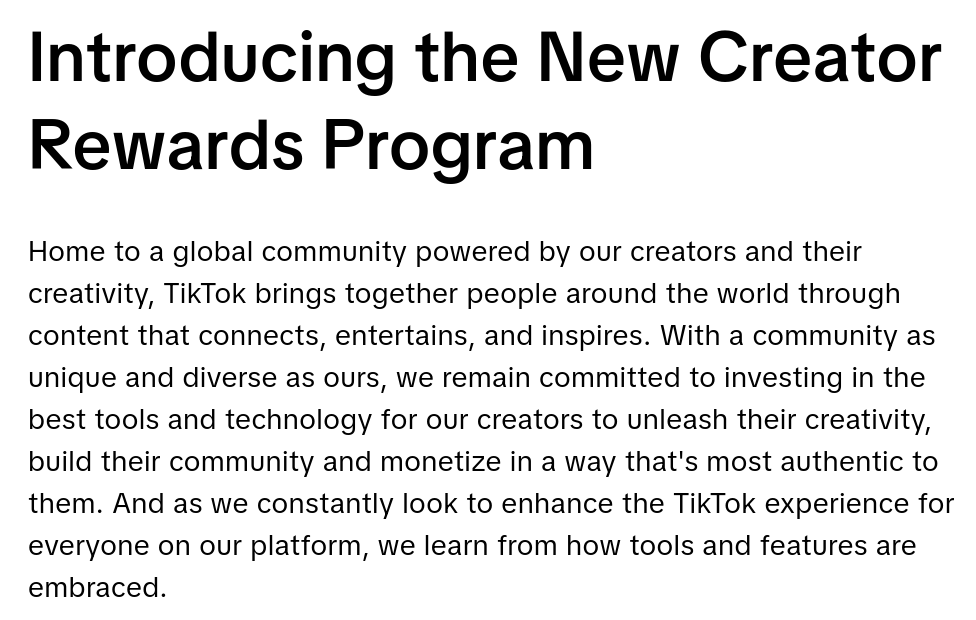
You might think of TikTok or Instagram Reels as a short-form competitor to the long-form YouTube; however, short-form content requires much higher effort to make (per minute of video), and is much harder to monetize (users can scroll away from advertisements). As a result, monetization often comes in the form of Rewards Programs, which are highly unprofitable for the creators.
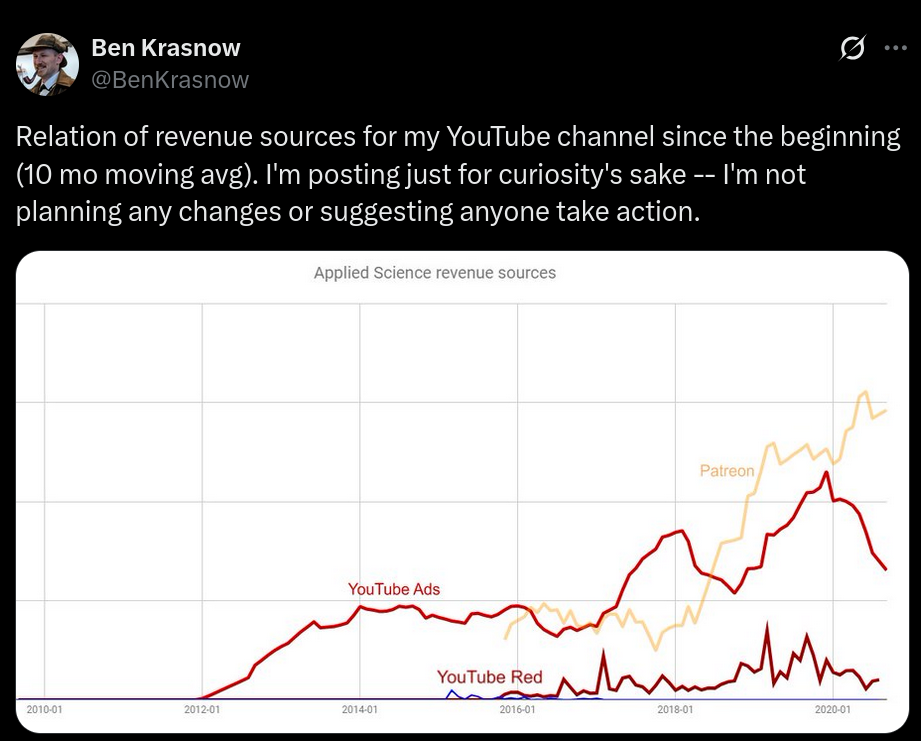
Other platforms have tried to make long-form content sustainable by putting it behind a paywall; I'm thinking of approaches such as Patreon's. Even if that works, we're back to the discoverability problem: it's really hard to stumble upon somebody's Patreon page by chance. As a result, these platforms are often used as a secondary channel, whilst keeping YouTube as the primary way to get discovered.
All of this is to say: if you suggest that content creators should not use YouTube, you're effectively saying that their videos should not exist, because there is no YouTube competitor to switch to. It's a monopoly.
And, honestly, it's something that worries me deeply. Monopolies are bad, and it only takes one bad decision by a YouTube executive to leave millions of people across the globe without a job.