I Made the "Next-Level" Camera and I love it
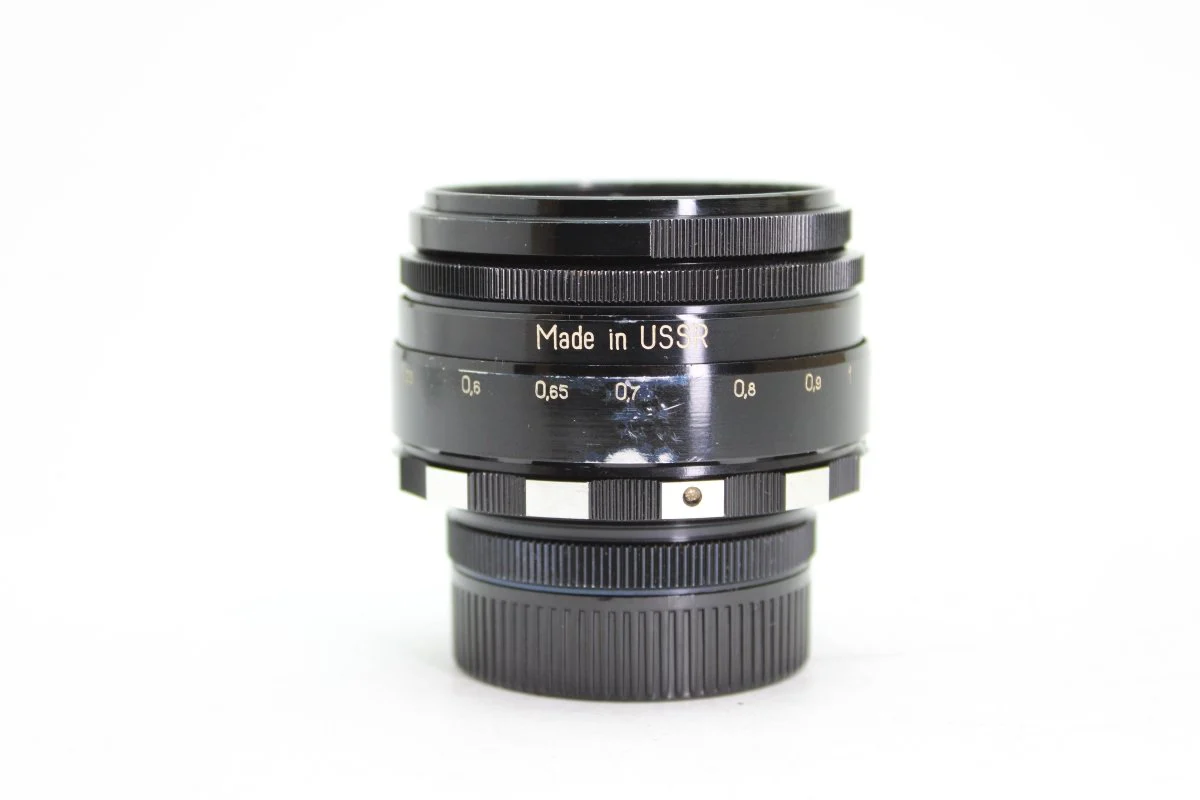
This is one of my favorite lenses: the Helios 44. It has an "aperture" of 29mm, meaning that if you look straight through it, the circle that you see has a diameter of 29 millimiters. Why do we care, you might ask?
You probably know that pictures can be out of focus. But why does "out of focus exist"?
Well, without getting too technical, the lens takes the rays of light emitted by an object and then converges them into a single point; if you place the camera sensor in that point, you'll be able to see the object. However, if you place the sensor closer or further away from where the rays of light intersect, then you'll get a circle and the image will be out of focus.
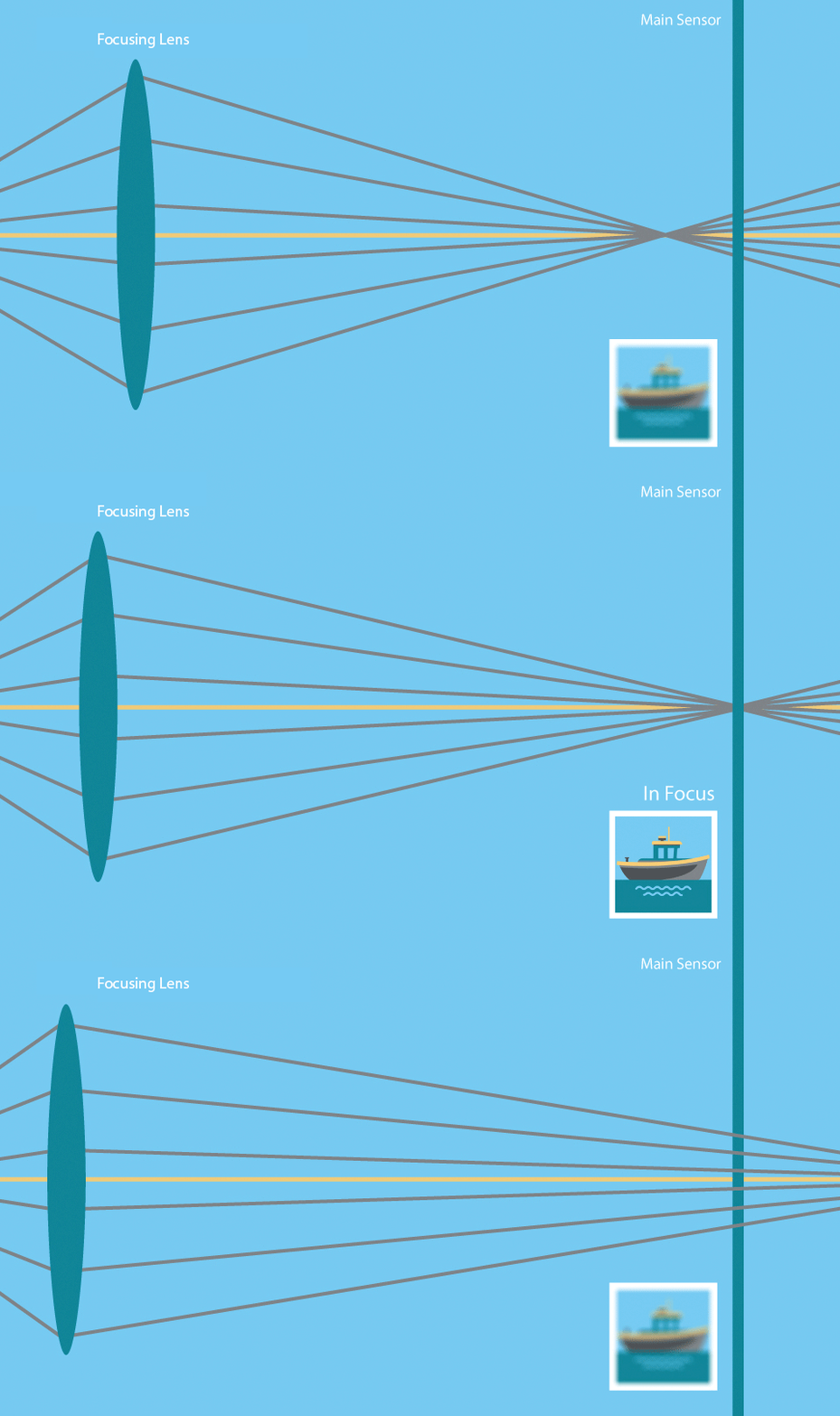
Now, here's the kicker: the bigger the focusing lens is, the larger the cone of light rays is, meaning the the out of focus parts of the image will be more out of focus:
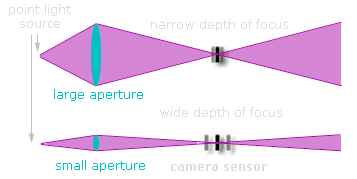
This is (partly) why phone cameras can't naturally reach the same levels of background-out-of-focus that camera can reach: they have such small lenses!
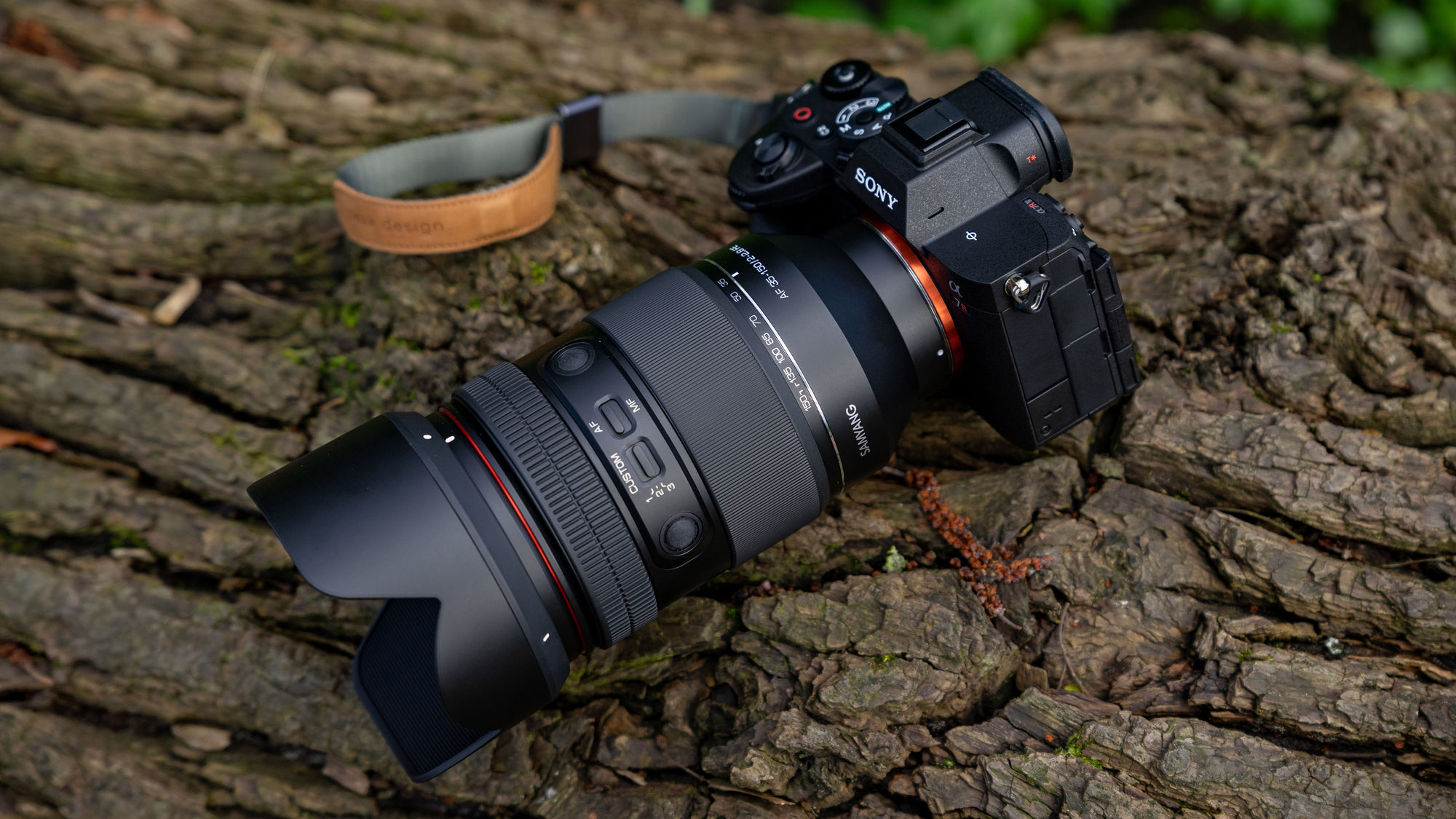
This is the camera lens that I do most of my work in. As you can see, this lens is much bigger; indeed, its (maximum) aperture is more than 53mm, almost double what the Helios can offer, which allows for a very strong separation between the subjects and the background.
The question now is: how big can we go? How much blurriness can we get out of a lens?
Well, assuming we're okay with carrying around a lot of weight, we can go pretty big. As an example, take the Sigma 135mm f1.4; this lovely lens (which I sadly don't own, yet) has a majestic aperture of 96mm,
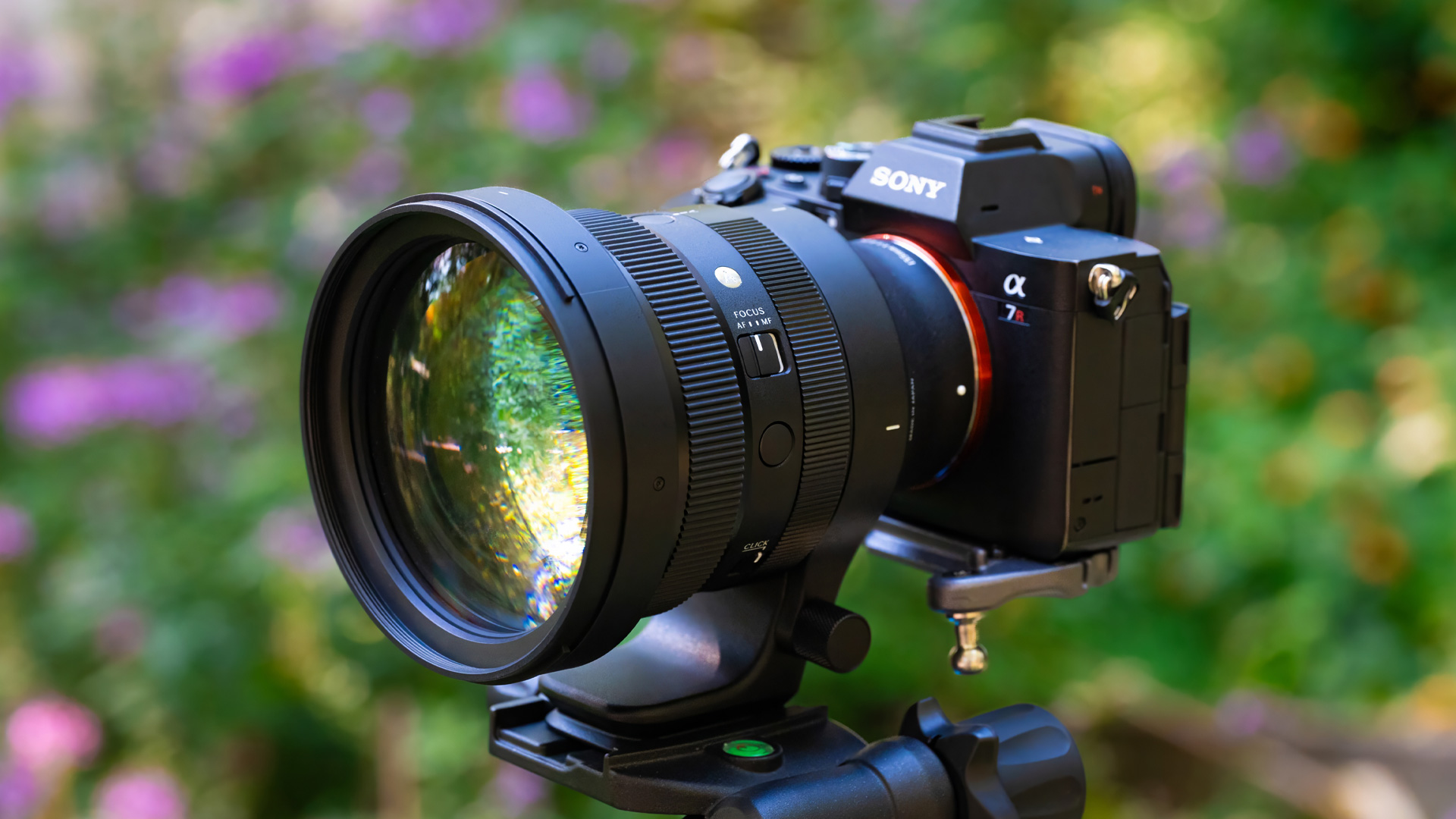
and it can deliver pictures like the following one. There's a catch, though: due to physical constraints, all of these large lenses are also always very "zoomed in"! Take your phone camera and set the zoom to 4x: that's roughly what you're going to get with this Sigma lens. This can be great for some scenarios (and it's my favorite focal length indeed) but what if we want to keep the same giant aperture but with a wider field of view too?

Well, we can't.
The reason is: remember the cone of light rays above? The bigger the lens is, the bigger the cone of light is too. But also: the wider the field of view of a lens, the bigger the cone of light too.
And, the combination of wide-angle-view and super-high-aperture would literally require light to pass through the metal of the camera in order to reach the sensor:
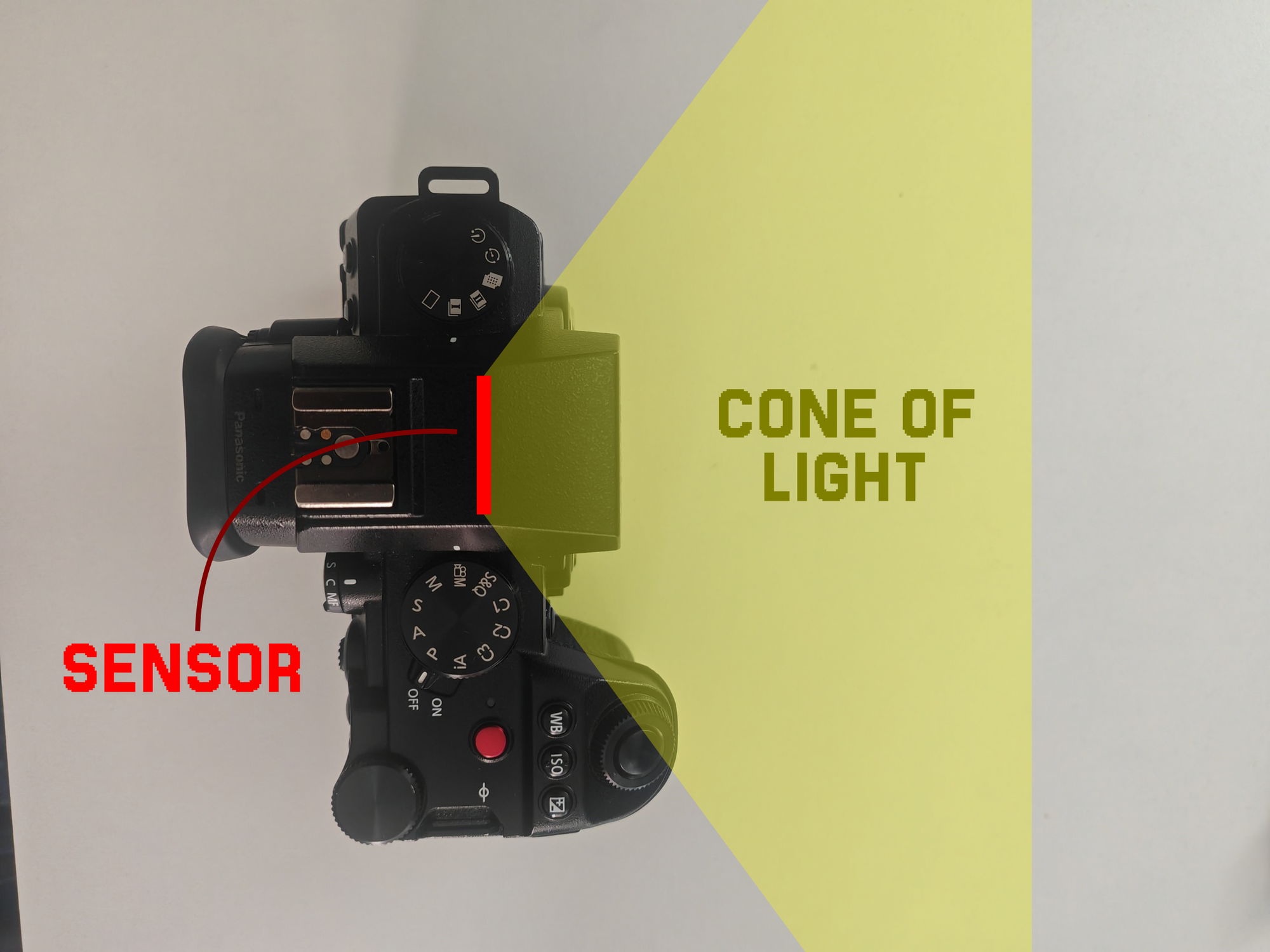
In order to work around this, you'd have to quite literally tear your camera apart in order to expose the sensor. Somebody has done it, namely some "Stanley Kubrik" guy, and - of course - the lovely folks at Media Division:
But even so, Kubrik only reached ~71mm of aperture, and that's still on a 50mm focal length lens, which is 2.7x wider than the 135mm mentioned above, but also not exactly a wide angle lens either. Media Division instead went for 136mm of aperture, but on a focal length of 100mm, awfully close to the 135mm. Also, I'm not taking my camera apart. And, finally, all of these solutions require these giant pieces of lenses that are extremely rare and pricey.
Luckily, there's a solution to all of these problems. Meet the Charles Beseler 18" Series III:
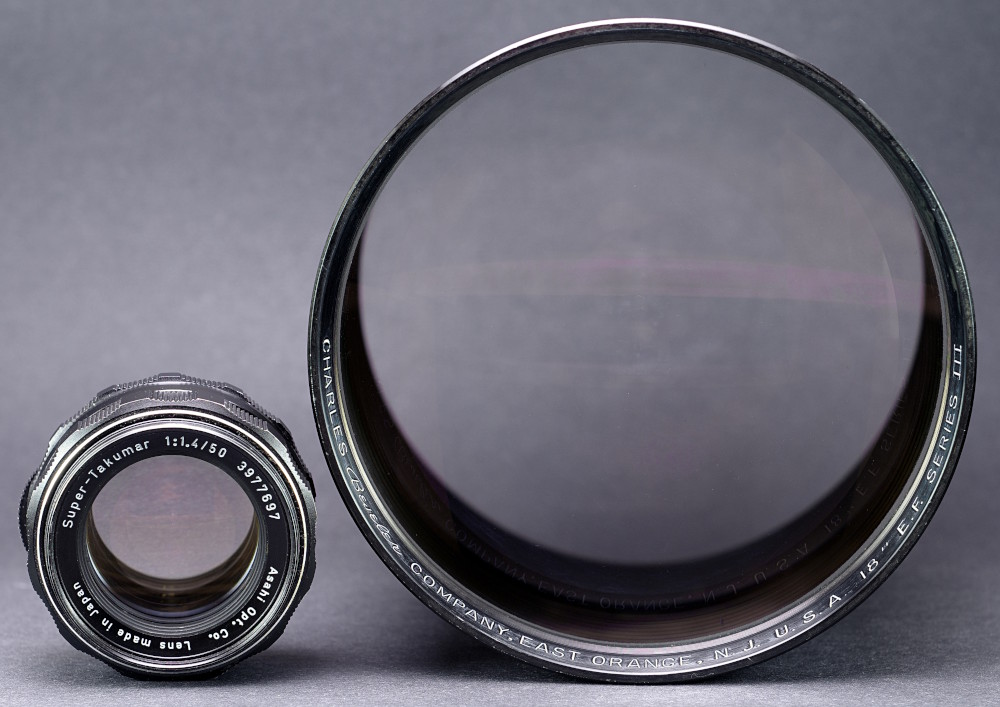
As you can see, it's absolutely huge. It's also really cheap to get: I bought to for around 200€, including shipping costs. These lenses were produced a lot of time ago and they were used as projector lenses, in machines like these:
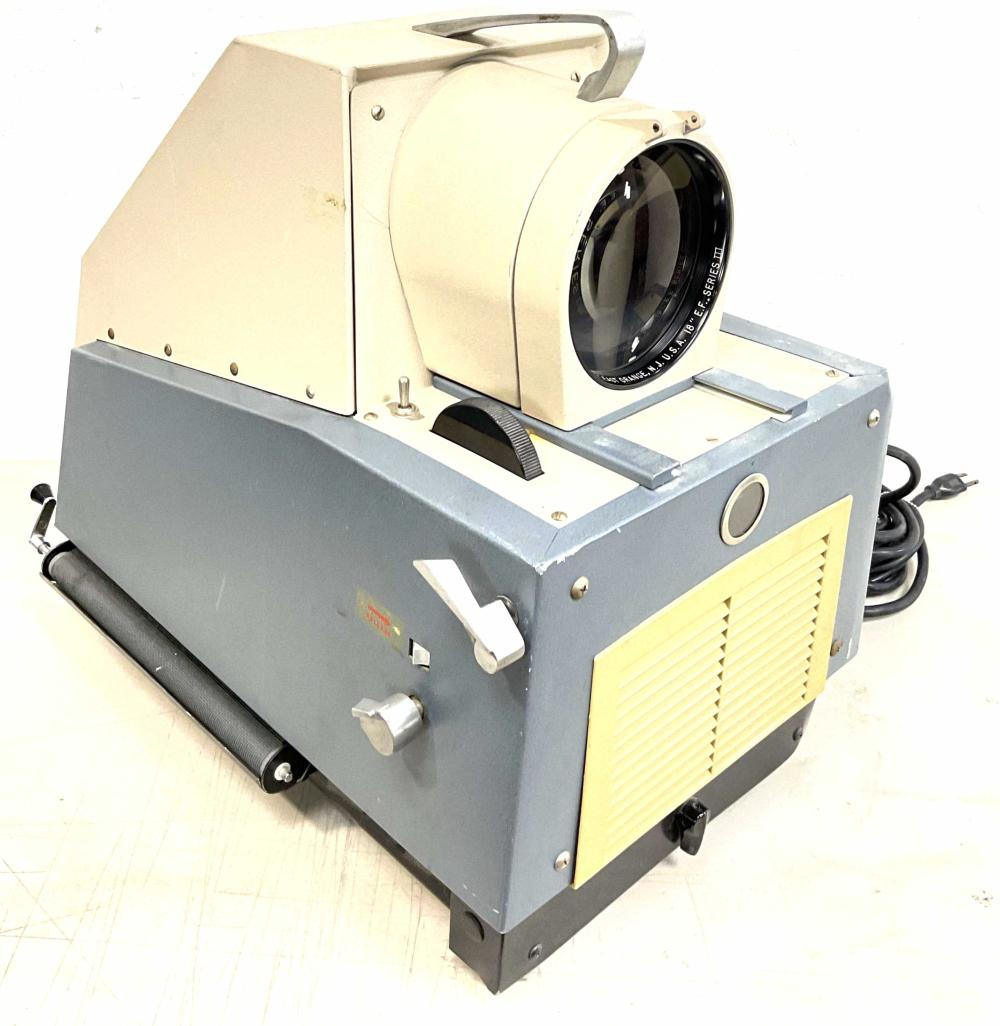
They are no longer used nowadays, and can be bought for cheap. And, as one can see by naked eye, they have a giant aperture. I can only provide an estimate for it, since there's no specs sheet for it, but it should be around 125mm.
So, you might ask, is this a wide angle lens? Well, the 18" in the name is telling us its focal length, and - converted to metric - that's ... 457mm. Which is roughly a 13x zoom in your normal camera, and so much more than we were looking for. Oh, no. Well, we knew it was physically impossible anyway.
Also, look how crazy of a contraption you have to build in order to connect this giant lens to a camera:
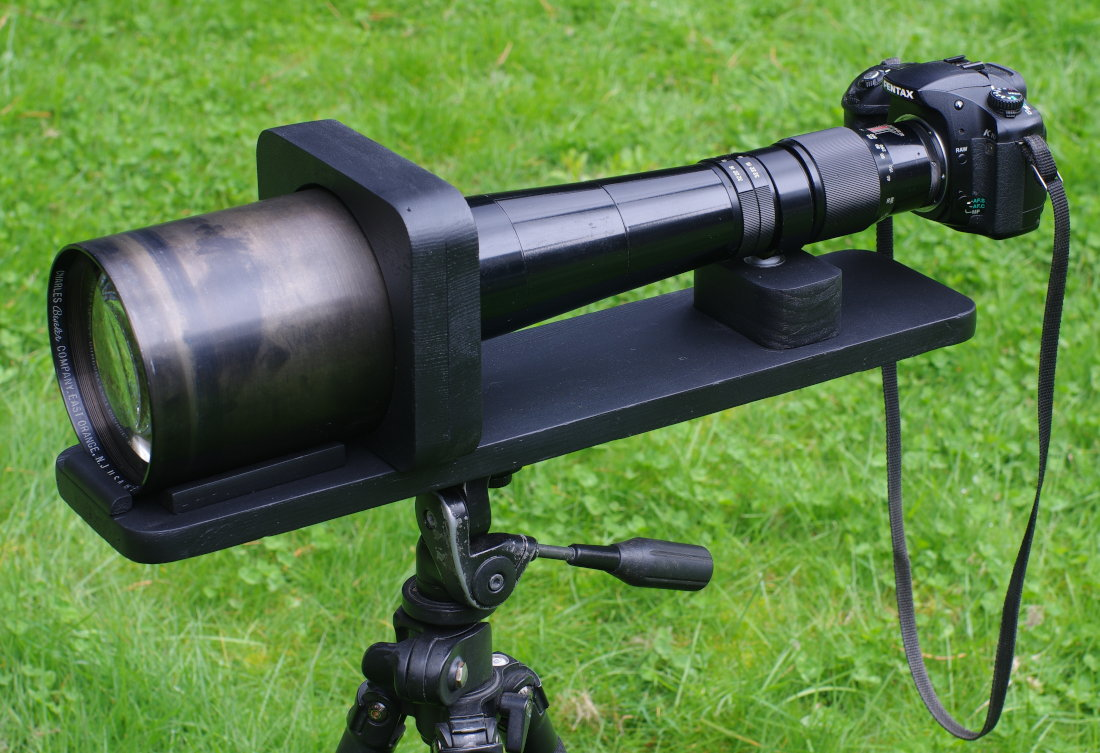
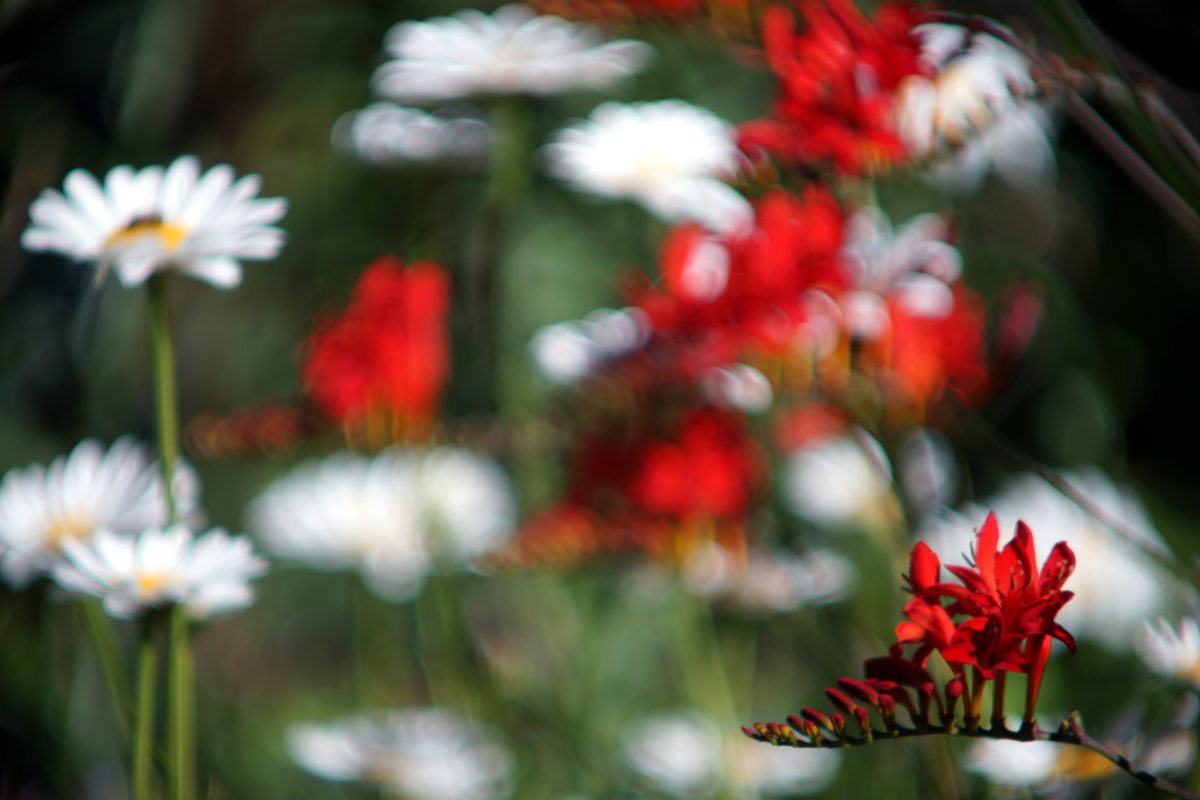
Though, it would produce some pictures, and indeed we can see a lot of out-of-focus (but also a lot of zoom...):
Fear not, though, the Charles gives us an extra tool to work with. So far, we've always assumed that we were working with a camera like mine, with a "standard"-sized sensor (it's called "full frame").
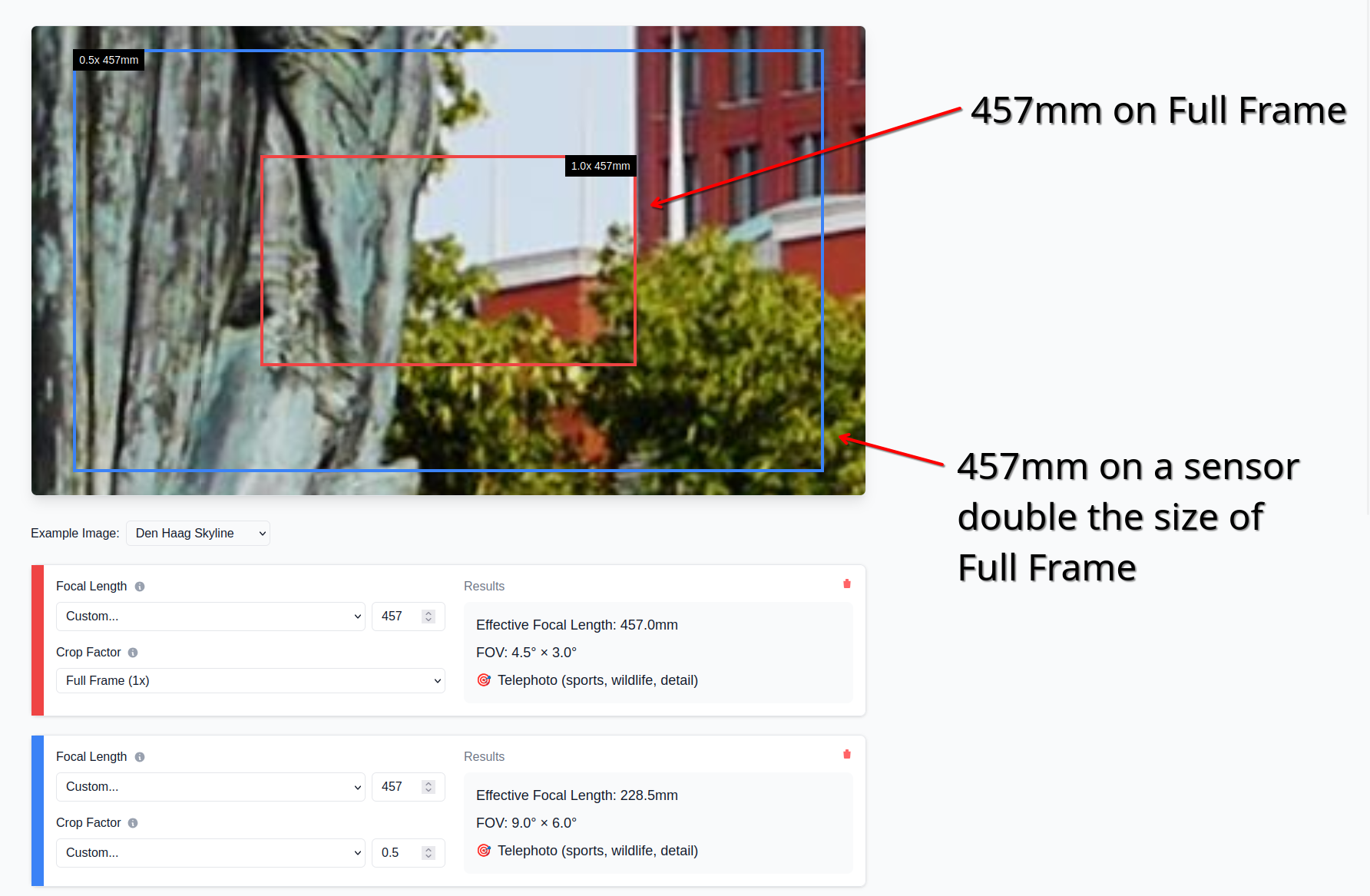
Suppose instead that we have a sensor that's double the size of mine. That would make for a pretty big camera, but still: a bigger sensor is able to capture a bigger image, effectively "zooming out": thus, our 457mm lens would become a 228mm lens. That's still not enough.
Let's double the size again. We're zooming out by a factor of 2 again, reaching a focal length of 114mm. That's still too much zoom. Let's double the size of the sensor again. We're now at 57mm. This is better already, though we should probably make the sensor just a bit bigger still, so that we can be around 40mm.
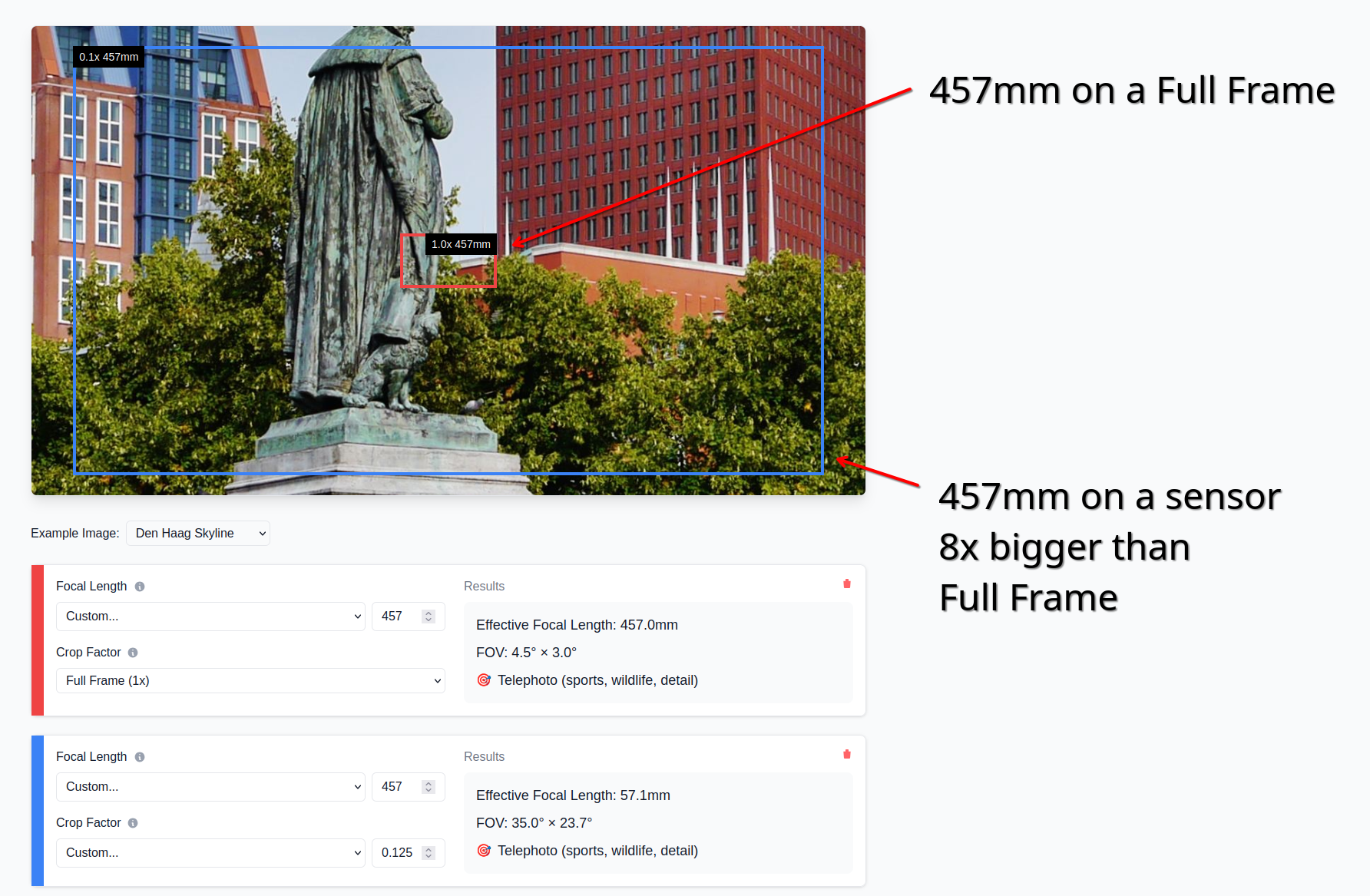
This means that the size of the sensor needs to be: the original size, times two, times two, times two, times one point five; that is, we need to increase the sensor size by a factor of 12.
My camera sensor size is 35mm by 24mm. Multiplied by 12, we get 420mm by 288mm. That's, uh, 42cm by 29cm. It's, like, pretty big. That's the size of a painting you'd hang on your wall. This gives us two issues:
Firstly, such a sensor simply doesn't exist. Films shot on IMAX use very big "sensor" (it's film) areas and we're talking about ~7cm by 5cm. It's not even "it's expensive" territory, it simply... does not exist.
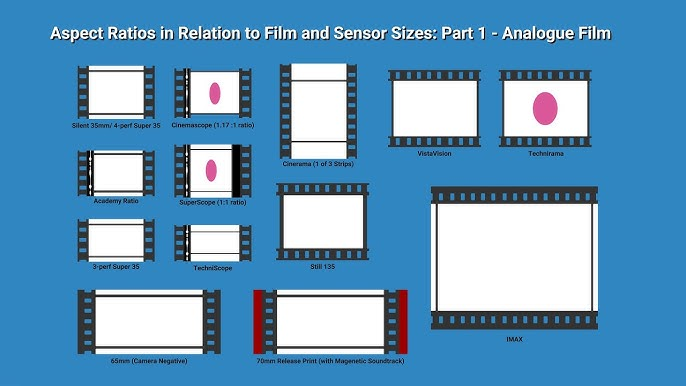
Secondly, lenses usually can't project an image big enough to cover such a large area. Most lenses are designed to be used with Full Frame sensors nowadays, or slightly bigger ones (such as "Medium Size" – look, I don't make the names).
The good news here is that the Charles was not built "nowadays". Maybe back then they didn't get the memo about future sensor sizes. How can we check how big of an area our lenses can cover?
It's thankfully pretty easy. If you simply put a lens near a white surface, you'll be able to see what the sensor would see. The Helios projects a rather small image on my white wall, but that's just enough to cover the similarly-small full frame sensor in my camera.
I do also have lenses that project bigger images. As an example, this weird lens that found in some used market gives us a pretty big image circle. It certainly covers a camera sensor, even a "Medium Size" one, but not a the 43cm by 29cm area we need.
The Charles produces a giant image. It's tough to see it exactly because the lens has to be very far from the wall now, thus the image is very faint, but it's there. I'm not sure how big it is, but it's bigger than 43cm by 29cm. This is it.
Now we have to deal with the incompetence of the human mind and quickly invent a new giant sensor, bigger than anyone has ever seen. It should only take a few minutes.
Jokes aside, what we need to make this work was invented a long time ago for camcorders. Back then, we were dealing with a similar problem: we had these consumer video cameras with very small sensor, and we had "pro" camera lenses that were designed to handle much bigger sensors. We needed some kind of "adapter" that would allow to connect the two.
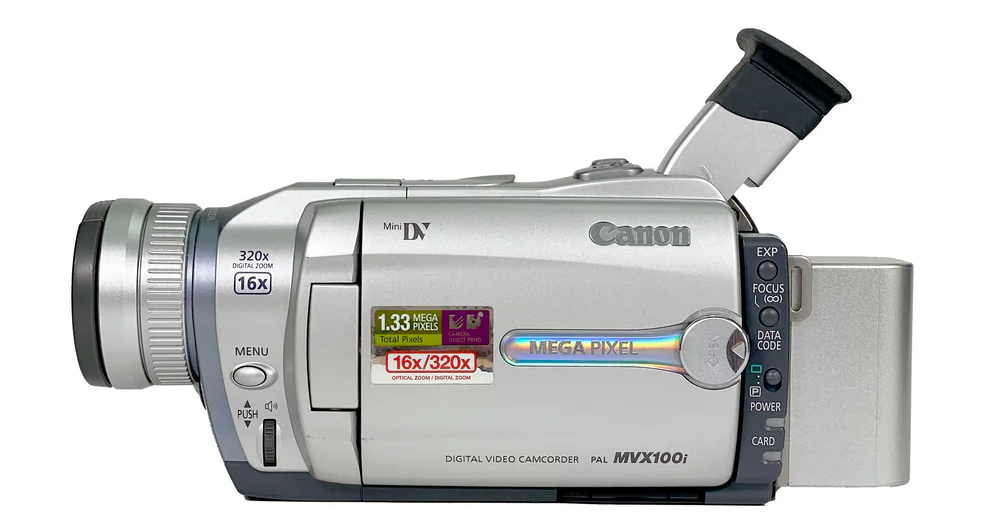
This adapter is called a Depth-of-field adapter, and here's how weird it looks.
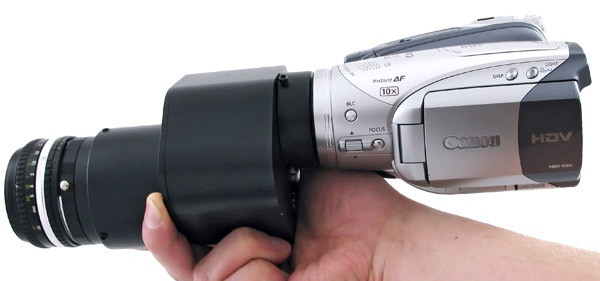
The idea is the following: we build a big "fake sensor" that's actually just semi-trasparent paper, and we focus the camera lens onto that "fake sensor". Of course paper by itself is not going to "capture" any image, but we can then go on the other side and take a picture of the resulting image, like this:
This is a rather weird two-step process, if you think about it. It needs to have a first lens that supports a bigger sensor area, then you project to a big "fake sensor", and then you need another (smaller) lens that captures the image coming out of the "fake sensor" onto the actual, real sensor of the camera.
All of this works because "semi-transparent paper", when lit by the lightrays coming out of a lens, will allow us to see exactly what a sensor would see if it was placed there. The reason is that the "semi-transparent paper" scatters light randomly, and so it deviates the lightrays from traveling straight to traveling towards our eyes (and all other parts of the room).
Let's see what's required to build this in our scenario.
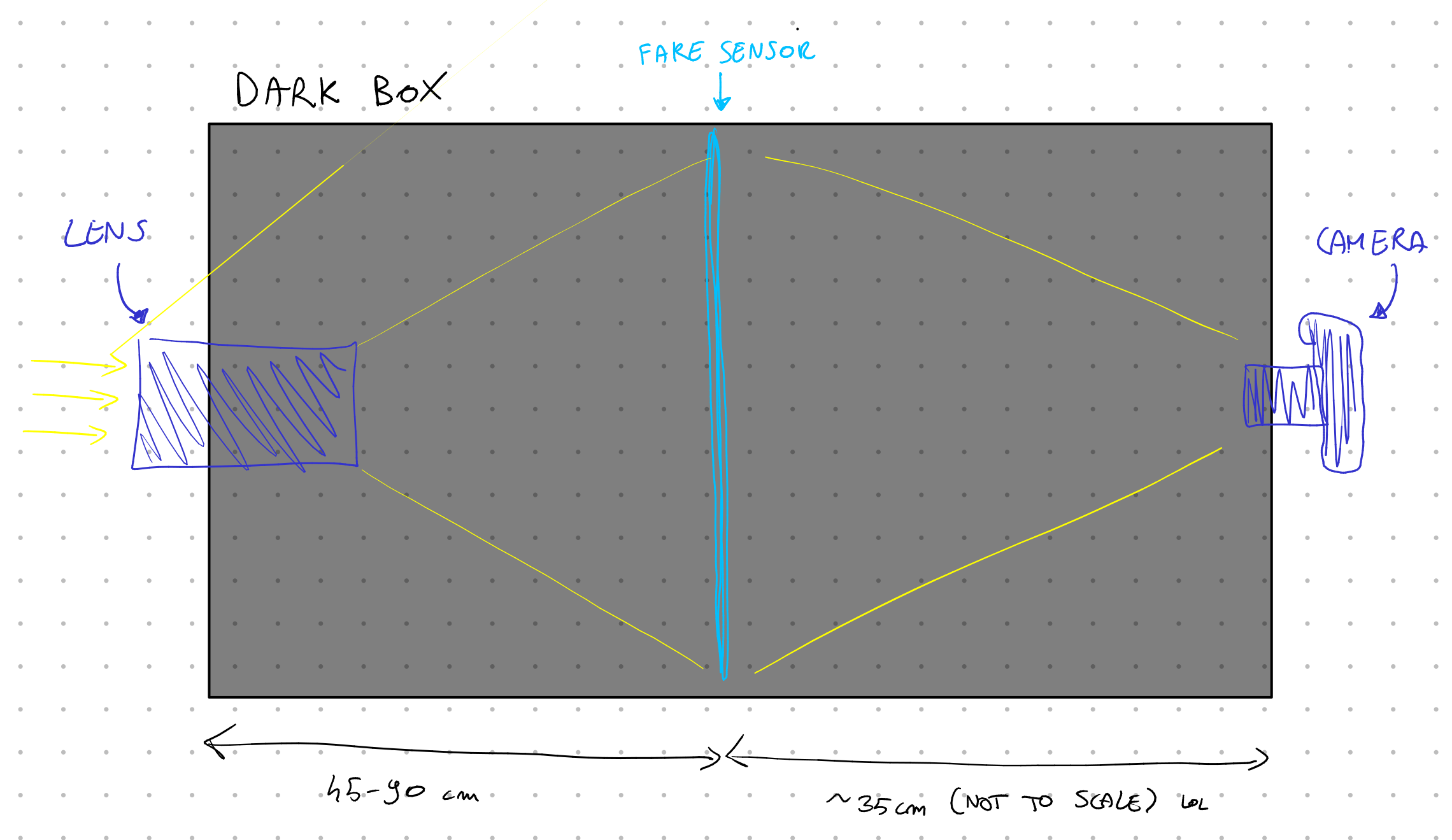
Firstly, we have the Charles lens, which has to see the world on one side, but should be within a box or something on the other side, so that no there's no light messing with our image.
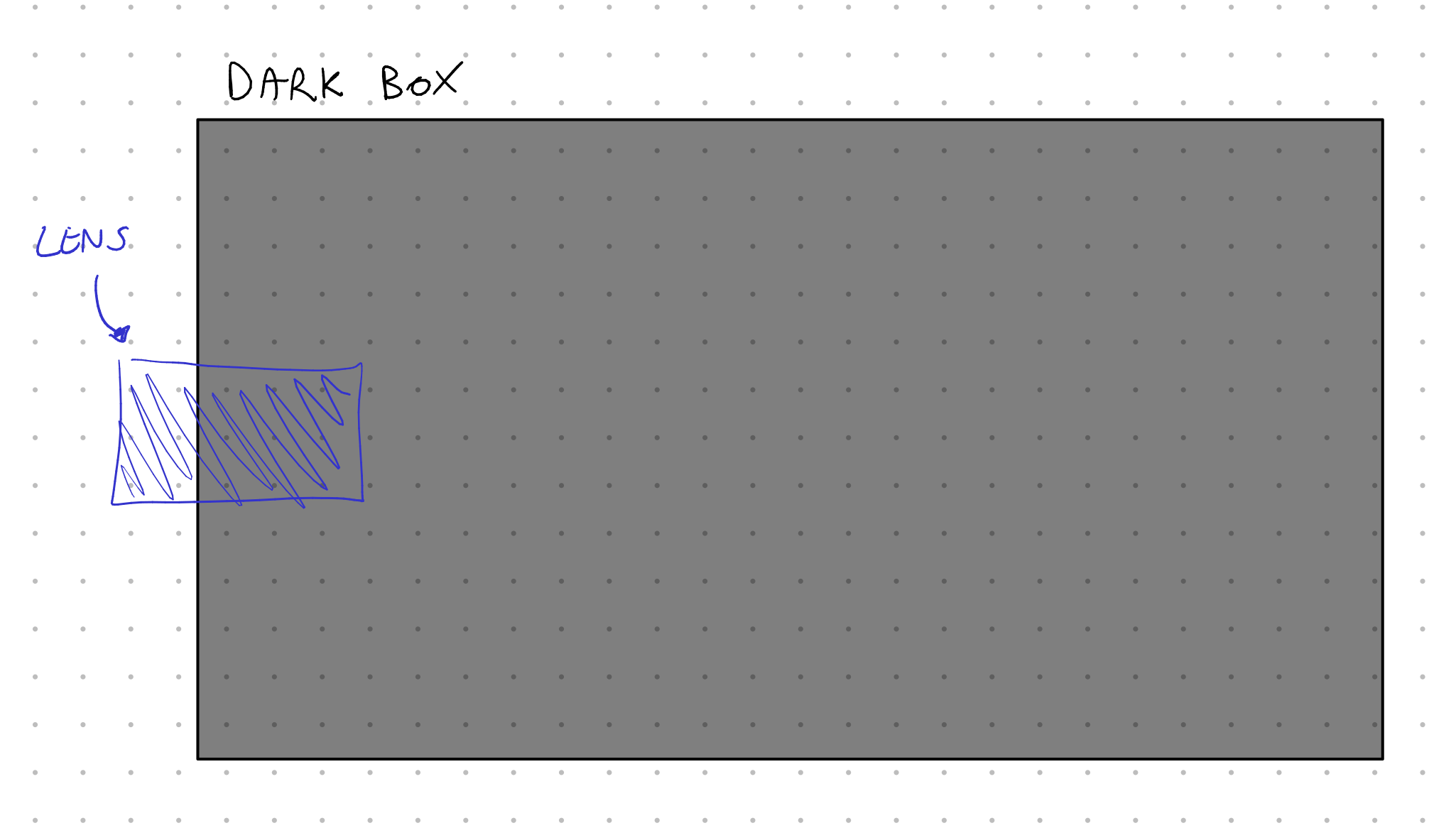
Then, within the box, there should be the 42cm by 29cm "fake sensor", and it should be made by some semitransparent material that scatters light without absorbing it. The Charles has a focal length 457mm, which tells us that the fake sensor should be at least 45cm away from the lens. Also, in order to focus the lens, this distance needs to be able to increase if necessary (even by ~2x!).
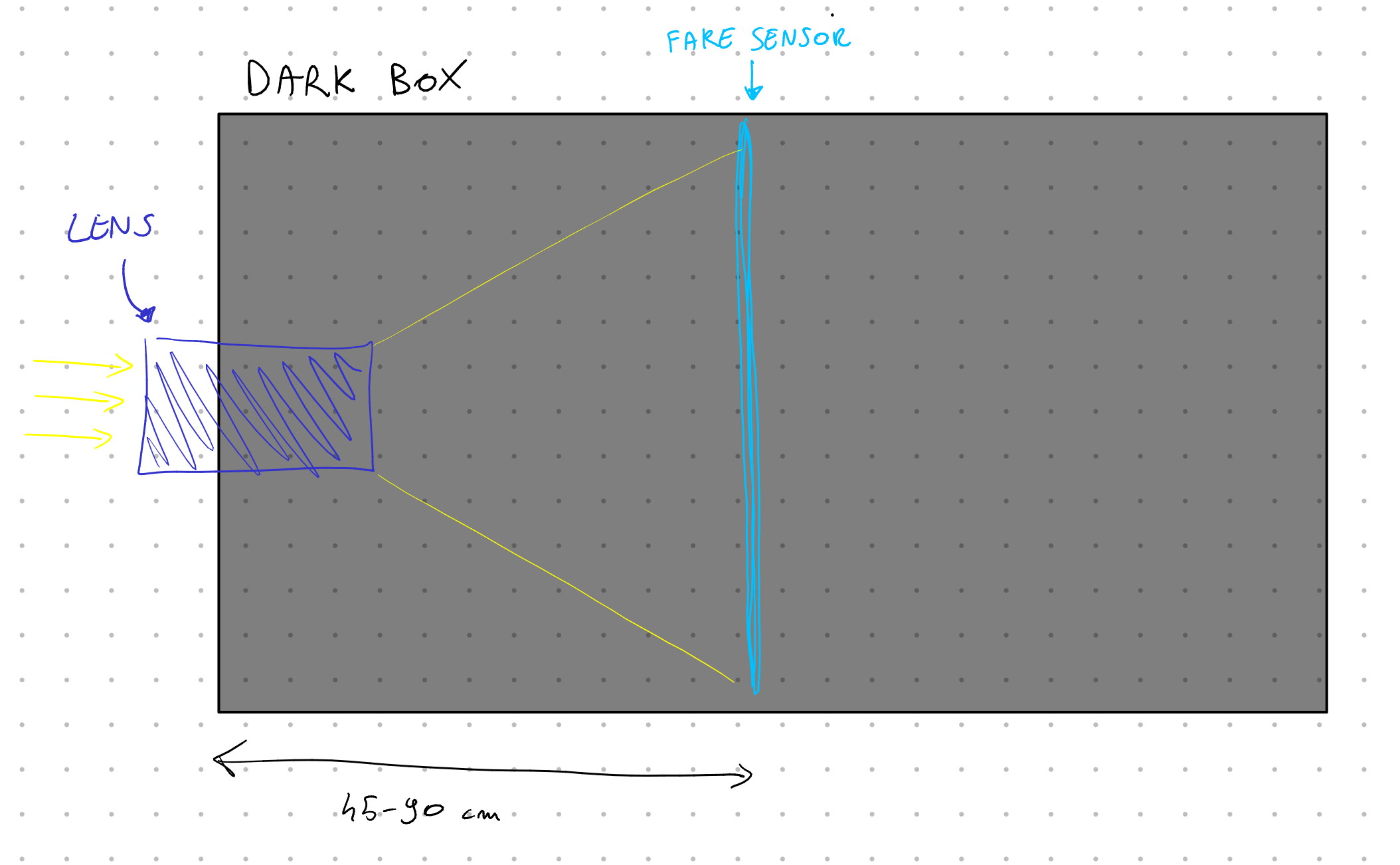
Then, beyond the fake sensor but still within the dark box (otherwise light will mess everything up), there needs to be an actual camera that takes a picture (or a video) of the fake sensor. The distance here depends on the exact camera and lens, but it's usually around 35cm.
Great. Let's build this.
Since the distance between all components will need to be adjusted, and since all of these components weight quite a bit (the lens is around 3kg!), I decided to go with a metal sliding rail (more technically, a vslot 2080) for the base. Then, bought a few sliding plates for it, which have a variety of holes in them.
Let's start from the Charles lens; we need to hold this lens at a certain height and attach it to the base plate. My solution was to hold a second plate up through some long screws and nuts to adjust the height. Then, to hold the lens, I found a couple of telescope holders which have three axis adjustments and support lenses up to 15cm. They had holes in the bottom to screw them onto the plates. Then, I can just insert the lens within the telescope holder and tighten the adjustment screws all around.
Then, on the opposite side, I went with the same idea to hold my actual camera; however we didn't need any telescope holder here, as there's a ring holder for my specific lens which can be just as easily screwed on the base plate.
Onto the fake sensor, then. Firstly: what should it be made of? I tried the following.
Paper. This does not work, as it captures almost all light that it receives, and thus you cannot see through it.
Papier-mâché. This lets some light through, but still very little, and it adds a very heavy texture to it. Also not ideal.
Baking paper. A surprisingly good solution, but it still doesn't let much light through, and you can see a light texture. Still, this is great for quick prototypes, and I used quite a bit of it.
IKEA PUCKELFLY. This is a frosted window film, which does roughly what we want, since it lets light through but also scatters it. This worked pretty nicely and was a great option to me, but it also introduced some heavy texture to the image, as you can see the grains in the image.
Wax. This almost sounds like a joke, but if you're able to create a ~0.3mm thick layer of melted wax, this should act as a great scattering surface that still lets a lot of light through. I spent quite some time attempting this, but I was ultimately unable to create an uniform layer. I still have kilograms worth of wax and I'm not sure what to do with it.
Homemade frosted glass. There are a few ways to achieve homemade frosted glass, and the easiest is to use some fine grit material between two sheets of glass and rub them together. I had issues finding the right grit, and was ultimately put off by the amount of work that this option requires. However, it's also the option that should provide the best results.
Photographic diffusion film. Okay, context: when you have a small but bright light, this will cast a very hard shadow, like the sun. Sometimes, you instead want to turn this into a bright, large light, that casts softer shadows. The easy way to do that is to put a diffusion film in front of the light, which will diffract the light around and effectively act as a bigger, softer light. This layer should absorb little light by design, and it's available in most photography shops. It's also relatively cheap, I paid 10€ for it, it works well. The only issue is that there's plenty of options, and all of them have some texture to it.
After much experimentation, I went with a "Lee Filters - 251 - Quarter white diffusion", which provided the best results for me. Note that it needs to be kept between two layers of glass, since it's a sheet of film.
Next up, I need some component that keeps the layers of glass and attaches to the base plate. I decided to go with a 40x30cm picture frame. The benefits of this choice are that it's a standard size that's easy to find glass for, and there's plenty of frames too. There's also a drawback: cameras don't record in a 4:3 aspect ratio, but rather (in opengate) 3:2, a bit wider. Thus, I'll have to either record more area and crop, or only record part of the fake sensor. It's not a big deal.
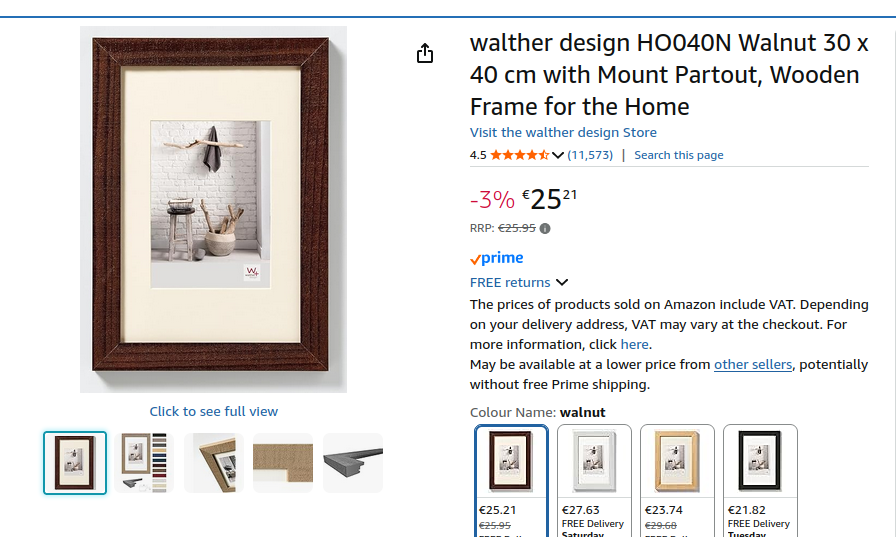
In order to secure the picture frame I simply used a few screws. It's more stable than you'd think. Note that, just like for all components here, I went through multiple iterations and the frame that you're seeing is, like, the 5th different picture frame I bought.
Now, we're finally able to position all components correctly! It sounds simple, but it took months just to get to this step. I had to receive most components from China and go through multiple iterations, but we got there. Now, for the hard part. We need bellows.
Camera bellows are these components that can change their size but remain rectangular in shape, allowing to change the distance between lens and sensor but without letting light in. They. Are. EXPENSIVE.
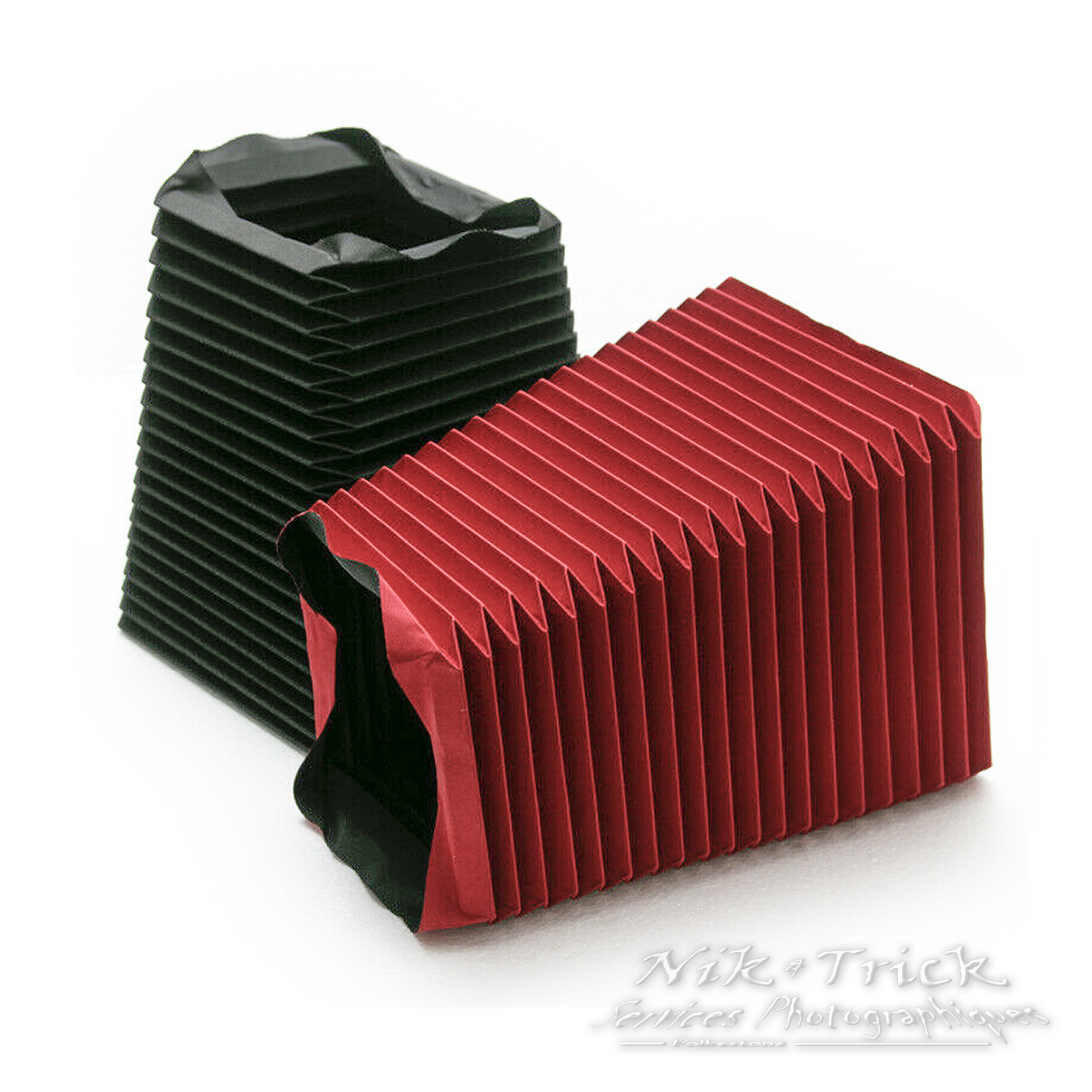
Luckily, it's easy to manufacture a small bellow. Sadly, we need an enormous one, and we still need to manufacture it ourself.
There are multiple ways to do it, (and I've tried them all!), but I'll keep the details light here. The general idea is that we need some materal that can bend (such as paper), but within it we need some places where it can't bend. Usually this is done by attaching precisely cut cardboard onto some paper.
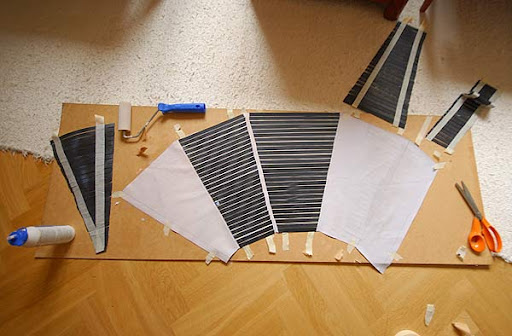
Then, you can bend specific parts to make the bellow. This is a rather time-consuming and fatiguing process, when the bellow is as large as I needed it to be! But, after much thought, I was able to come up with two tricks to simply it.
Firstly: all bellow images I've shown you so far were of bellows where the entrance rectangle is bigger than the other side, and thus they have this trapezoid look to them. This is appreciated, since we've got a 40x30cm sensor on one side, but the lens on the other side is much smaller. However, this makes them harder to manufacture, so I decided to go with a much simpler bellow that's 40x30cm on both sides.
Secondly: I used IKEA curtains. No, I'm not kidding. Meet the SCHOTTIS.
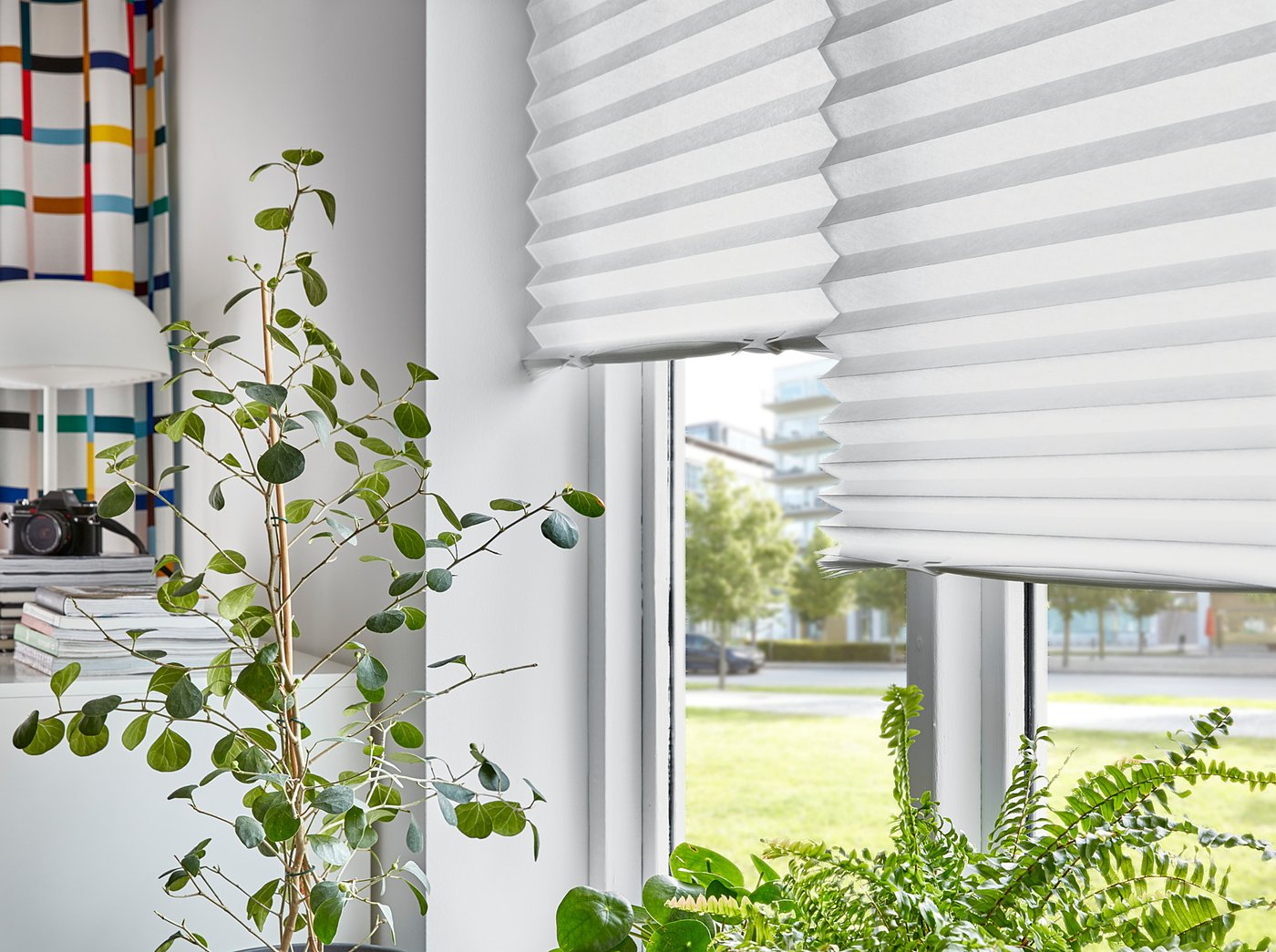
This curtain is provided folded in ~3.4cm stripes, and it's available in a black color. Since it's a curtain, it's also able to block light effectively, and since it's IKEA, one of the side is plasticized and thus tough to break or tear apart.
This makes our job much easier, as now it's just a matter of leaving the folds where IKEA intended them, cut the curtain into four different pieces, tape them together in a different direction, and re-fold the entire thing correctly. The final folds on the bellow are either the existing ones in the provided curtain (possibly in the opposite direction), or in the places where we cut the curtain, so everything else gets to remain more rigid.
This was still a multiple-hours-long process, especially since I had to manufacture a couple of bellows to test different properties. This year I decided to catch up with Severance and I'm not joking when I tell you that I watched the entirety of the first season whilst folding IKEA curtains, cutting them, and taping them together again.
Ultimately, I had my bellow. It doesn't look stylish but it works. On the lens side I placed another picture frame with cardboard inside and made a hole at the center, so that I had 40x30cm components on both sides.
Then, let's talk about the space between the fake sensor and the camera. There's no way that I'd make another bellow, but thankfully the distance here has to be fixed (depending on the taking lens). I measured the most convenient distance and made a cardboard element with the correct sizes. It's not as sexy as the bellow but it does the trick, and - if necessary - I can still insert the lens within the hole at various distances for small adjustments.
There's one final component to put in place. Right now everything works, but I get some heavy vignetting, i.e. the corners of the "fake sensor" are dark. This is expected: the frosted surface reflects some of the light, but most of it just goes through it and we don't see it.
There's an easy solution to this: before the "fake sensor", we can place a lens that will change the direction of the light from outwards to towards the sensor. This way, most light will still travel towards the camera after passing through the sensor.
However, you should see an issue coming up: a lens that's big enough to physically cover a 40x30cm sensor would require a diameter of 50cm. That's a gigantic lens: the Charles felt pretty big already and that was just 14cm. It would be extremely hard to manufacture and very pricey.
This is where lighthouses come to the rescue. Yes, you read that right.
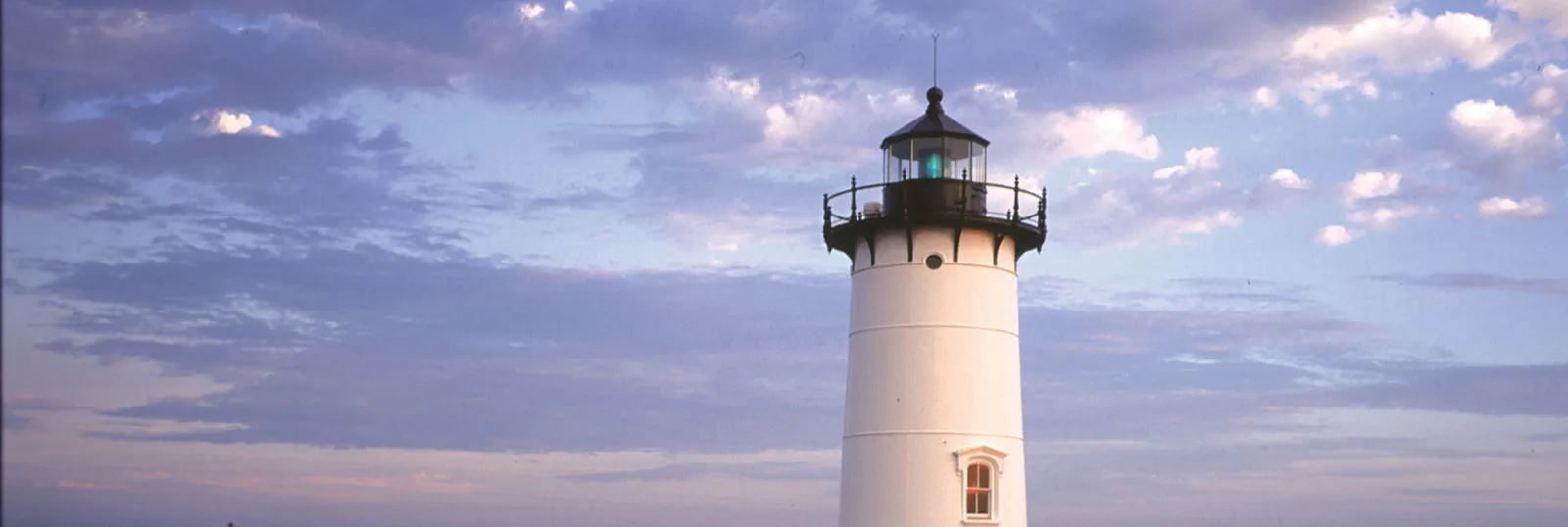
Each lighthouse has a big source of light; however, in order to make that light shine in the right direction and the maximum intensity, you also need to place one lens in front of it. However, a lighthouse light is even bigger than our fake sensor, and the required lens would have to be absolutely gigantic.
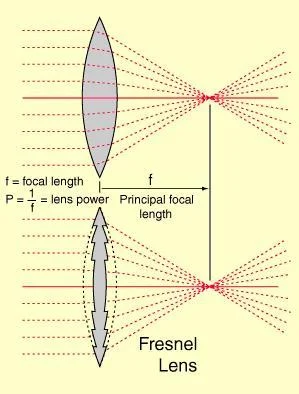
Because of this, a new type of lens was discovered! It's called a Fresnel lens, and it works similarly to a normal lens, but it's flat:
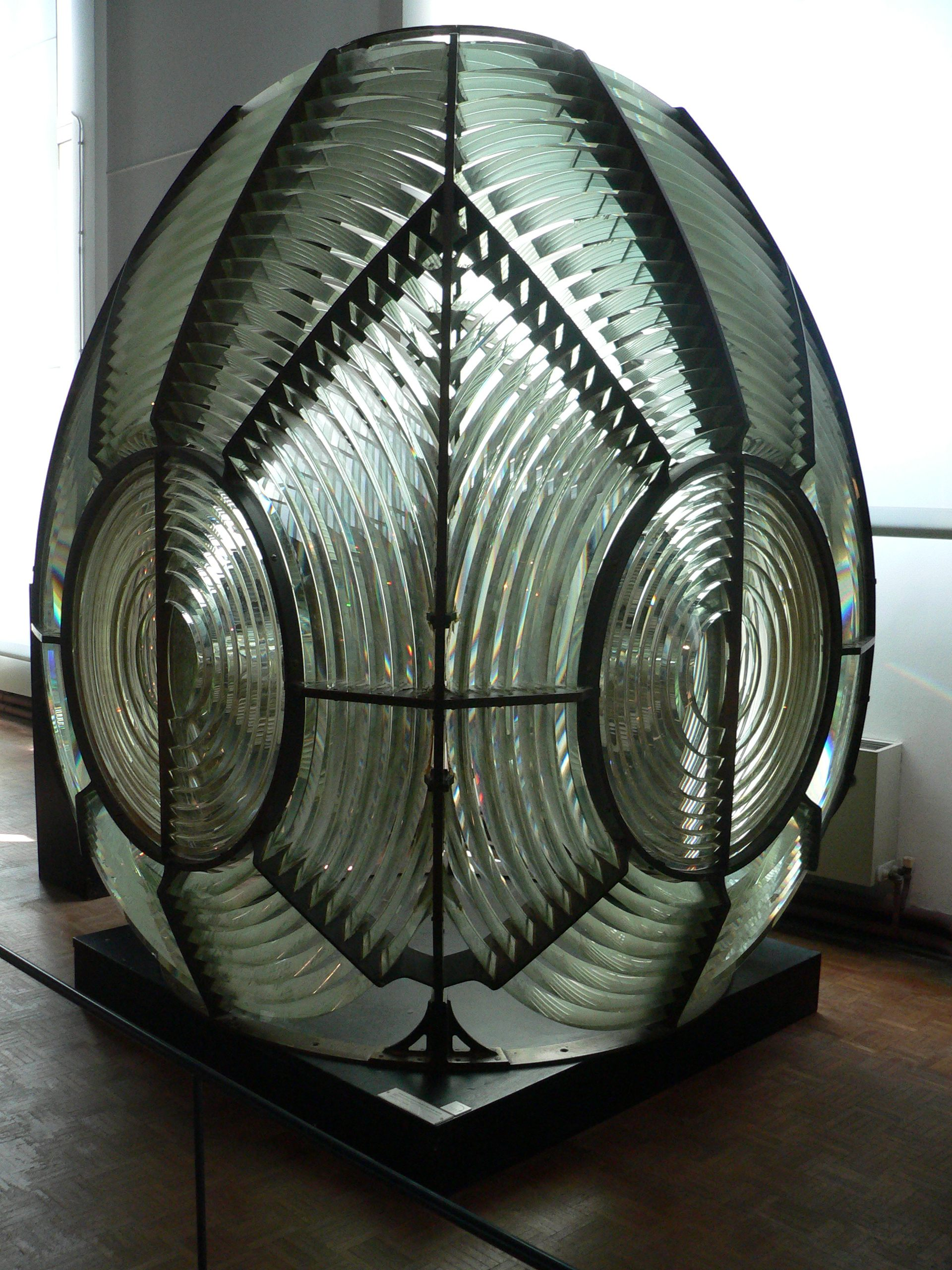
Thus, a lighthouse was able to use big flat lenses, which are much, much easier to manufacture, as they don't require huge chunks of glass:
Fun fact: you can actually see fresnel lenses in multiple places where a normal lens would be too big or expensive. As an example, my own building places fresnel lenses in front of exterior light to direct the light correctly!
Anyhow, the good news is that we can just use a fresnel lens without worrying about it affecting image quality, or being too expensive. They can be bought for cheap on Aliexpress. They come in various sizes, including (thankfully) 40x30cm.
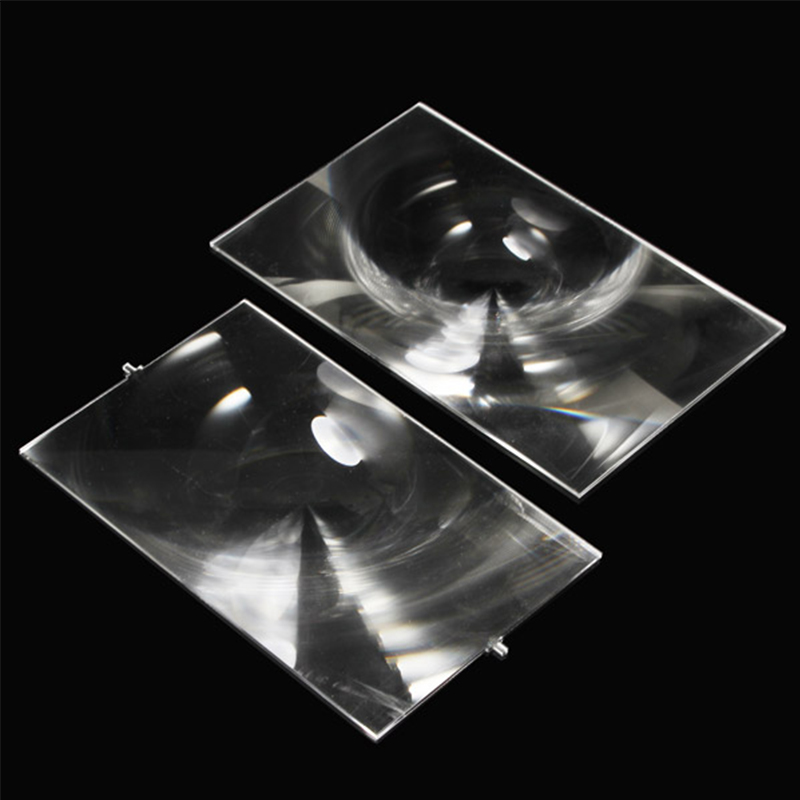
And that's everything really. Having placed the fresnel lens, we're not able to get an usable image on the whole 40x30cm sensor. The only thing that's left to do is, well, shoot some scenes with it!
The good news is that I had already planned to shoot a short film last month, so I brought this along and used it for multiple scenes that specifically required a very thin depth of field. I was genuinely shocked by how good the results were, and - amongst the many mistakes I've done in production - this was one of the few things I'm very proud of.
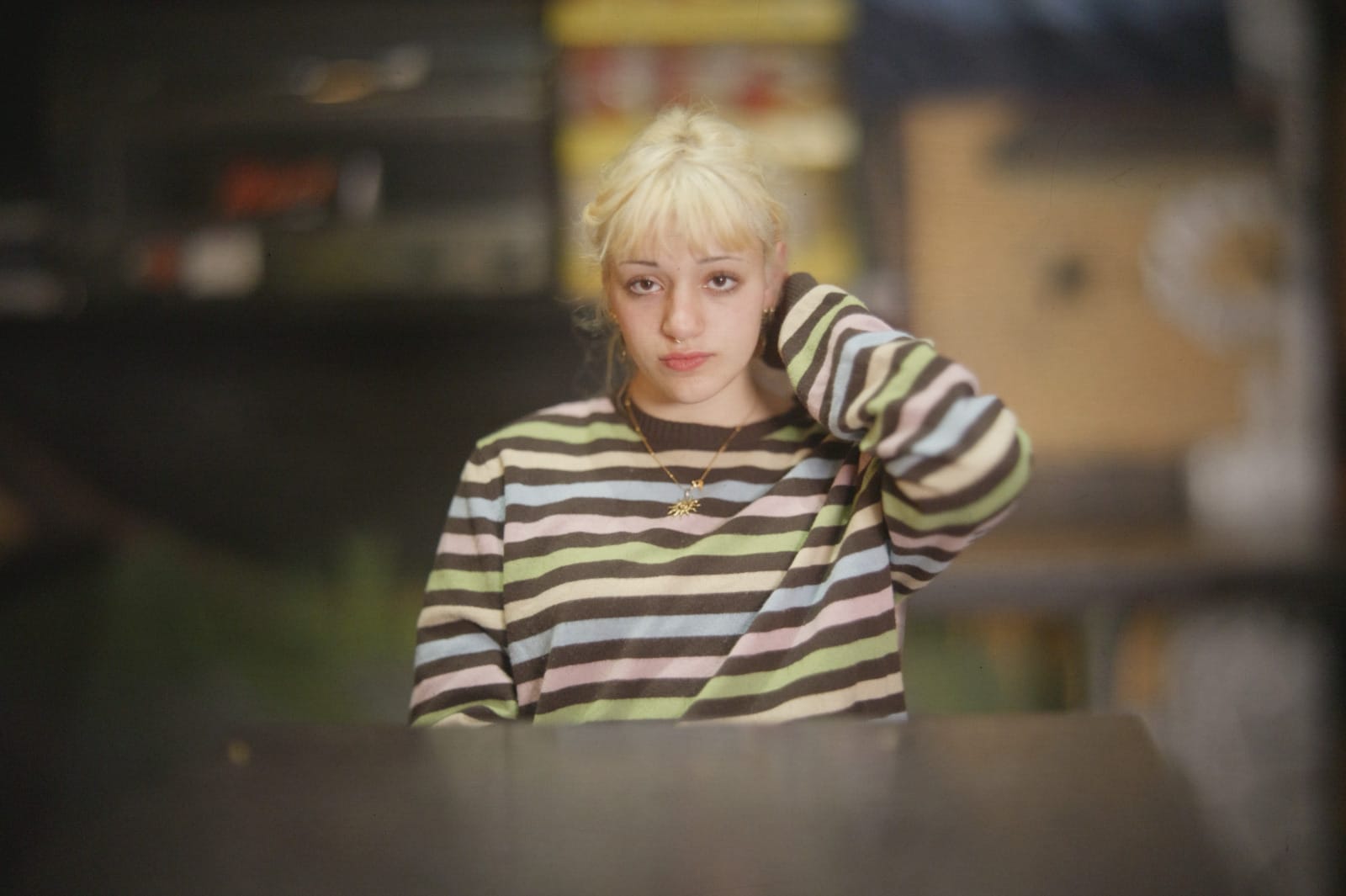
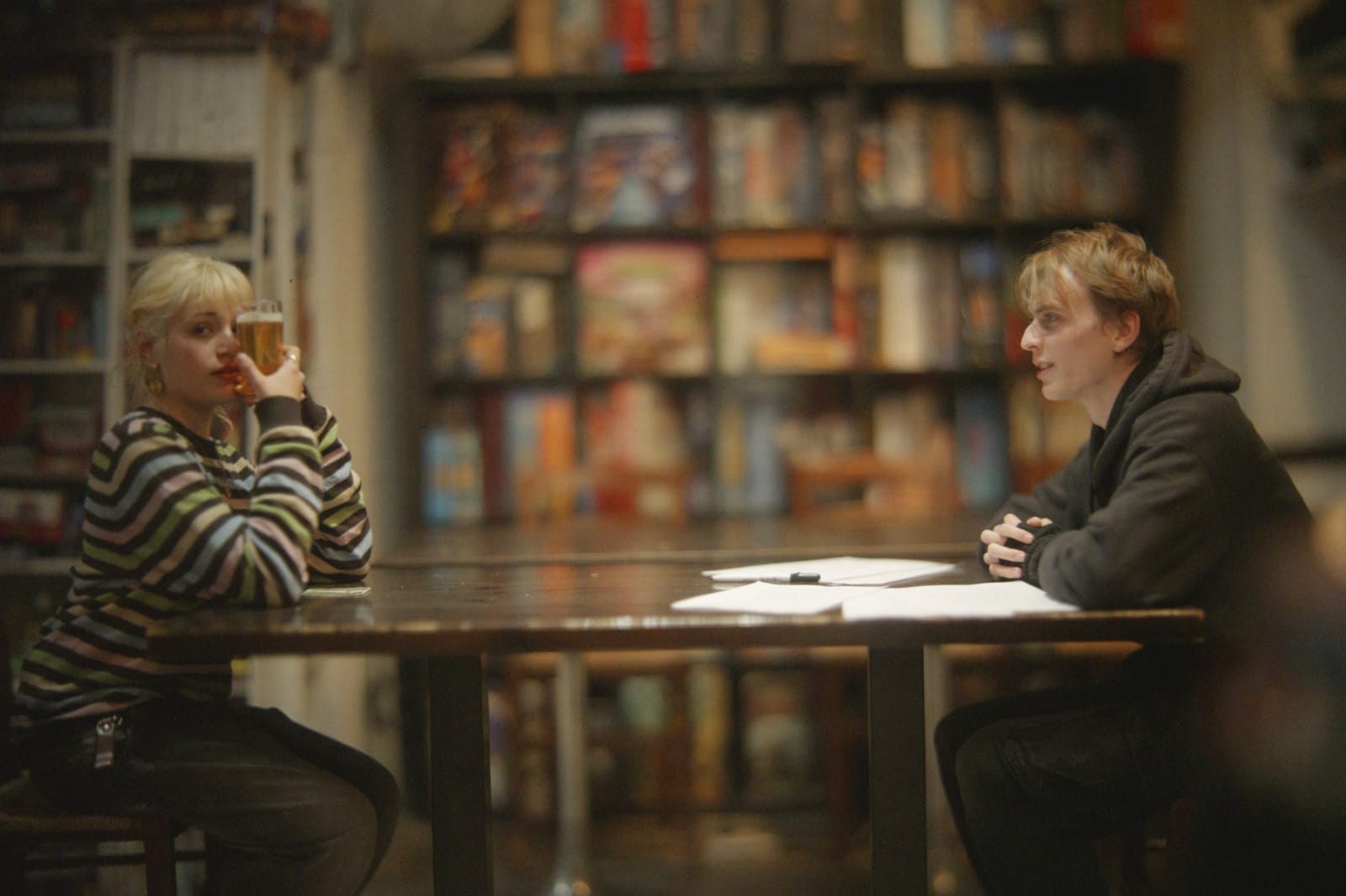
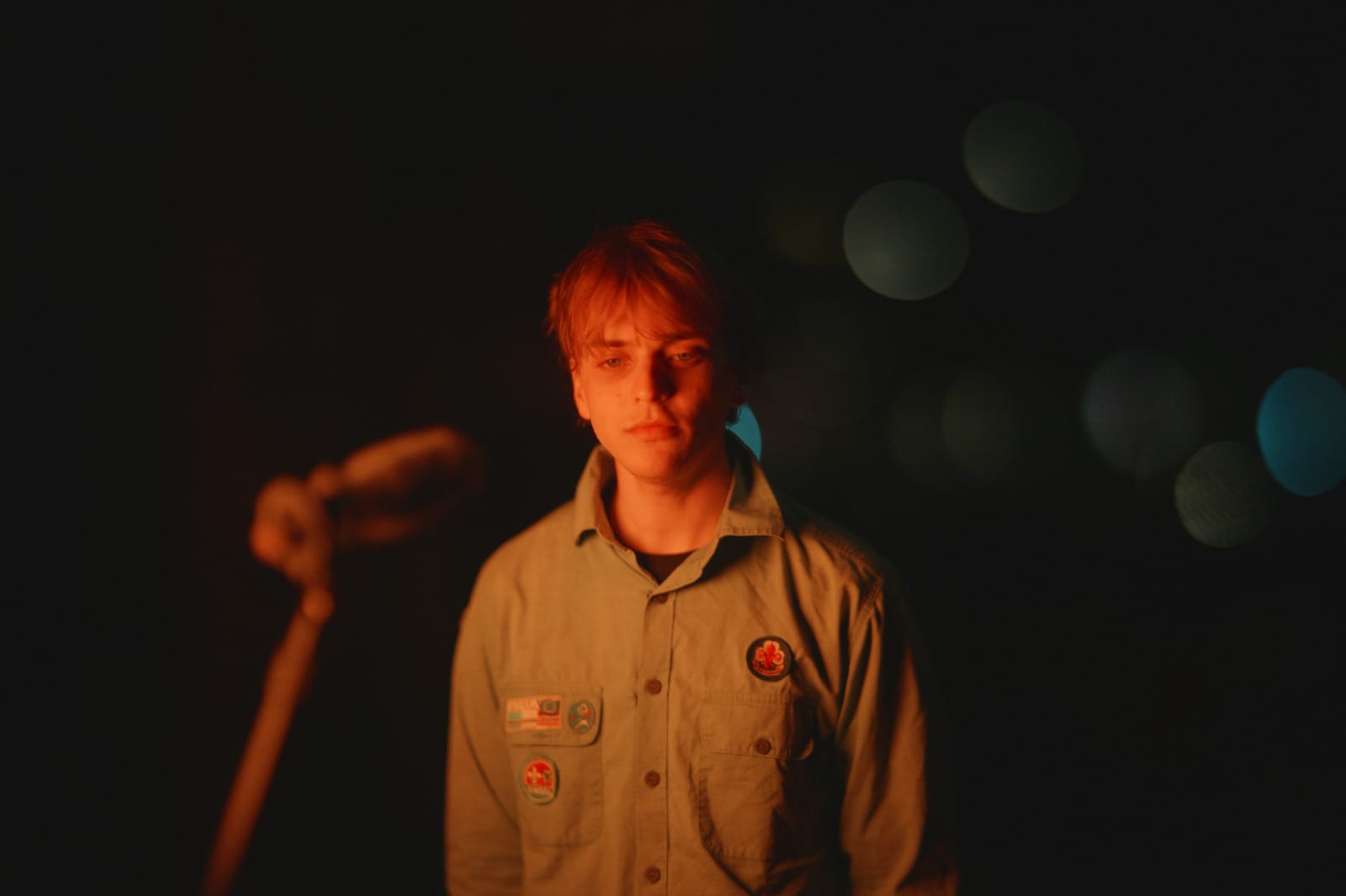
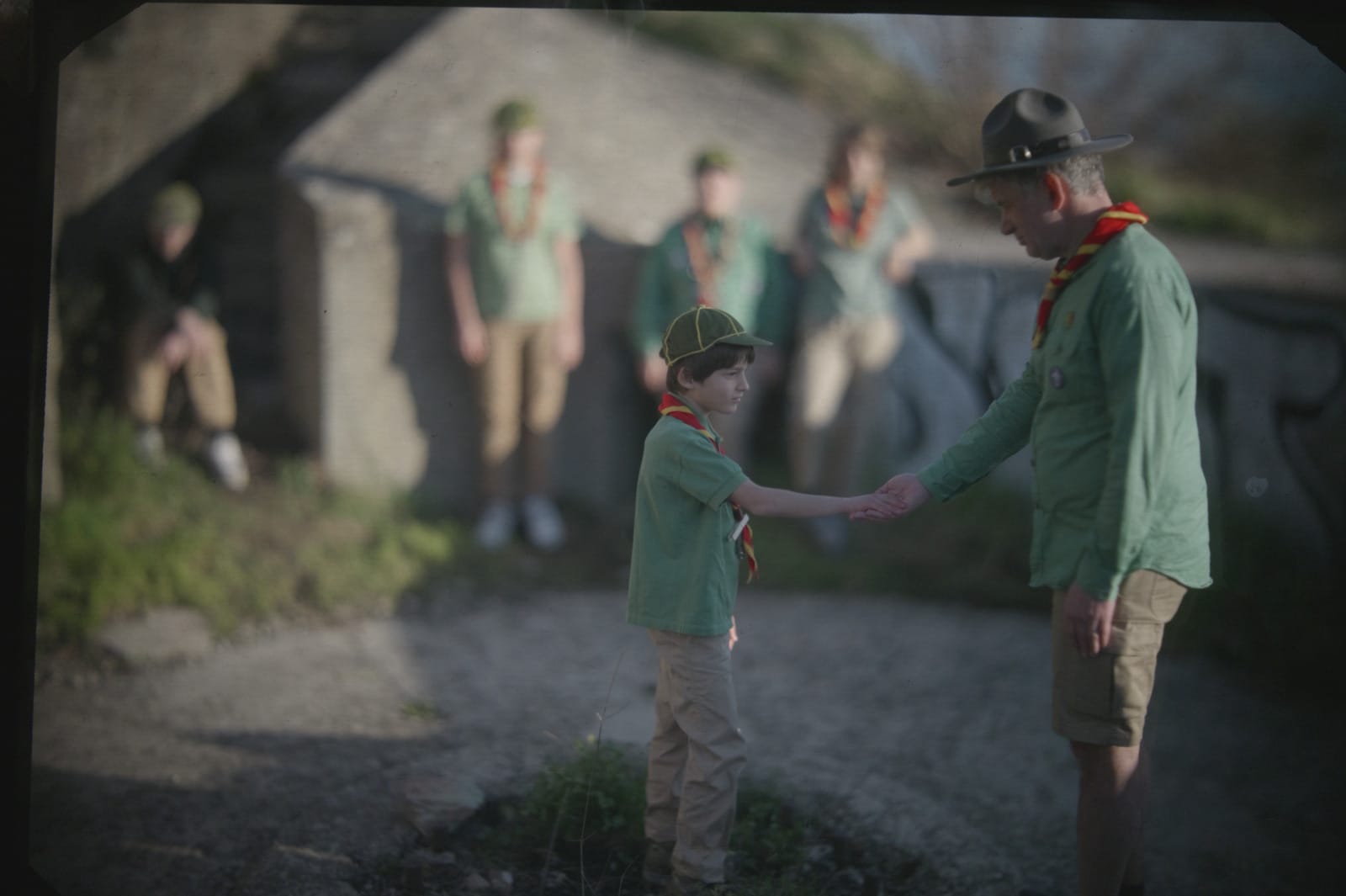
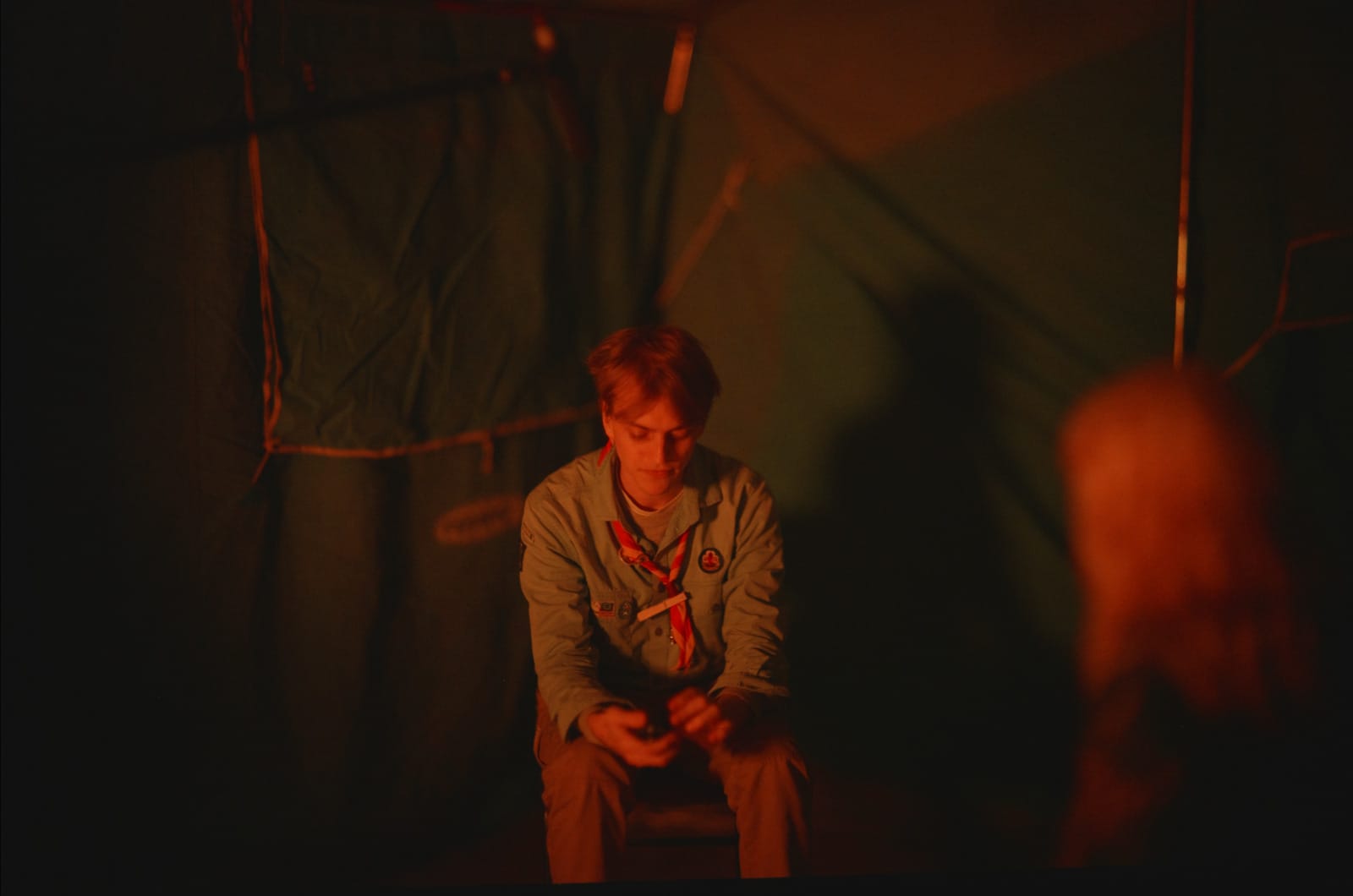
Here's some more pictures with an earlier prototype:
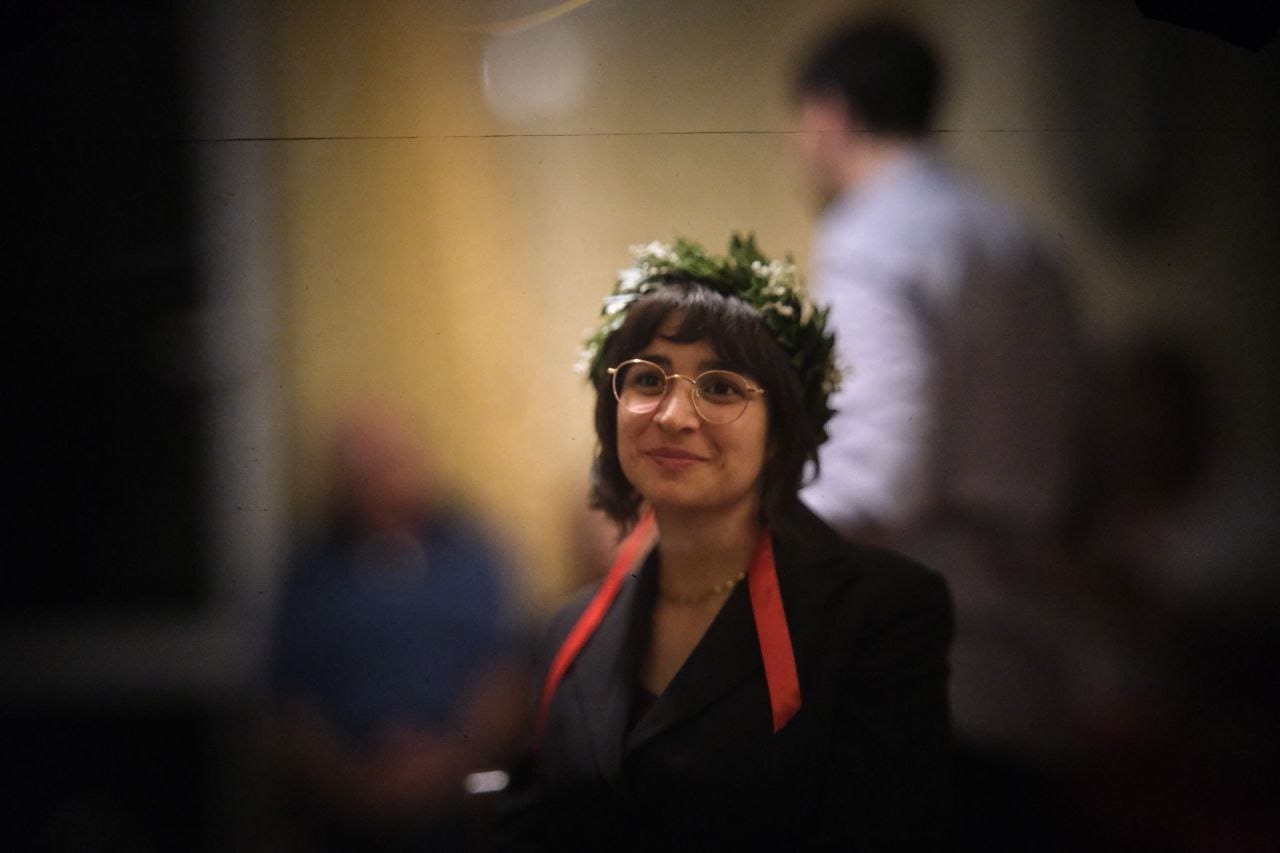
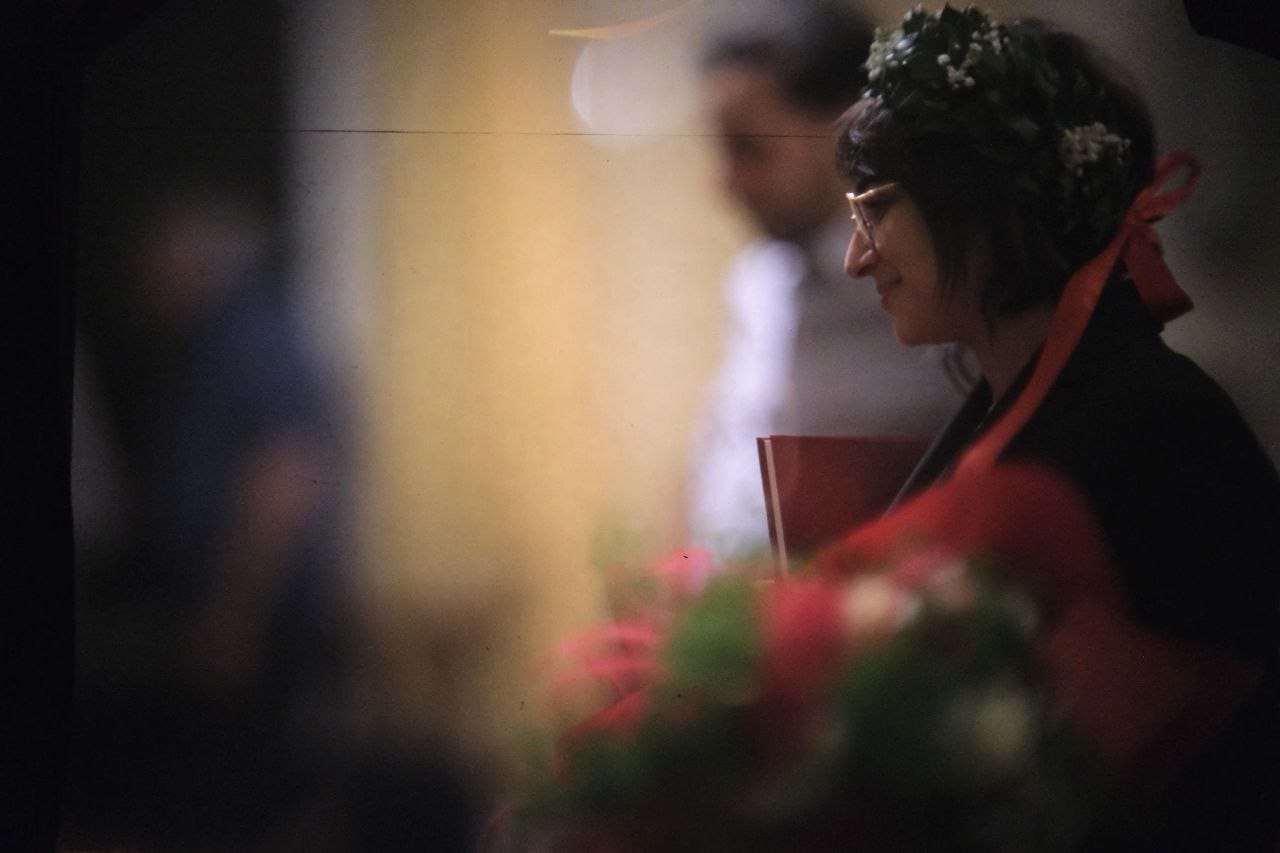
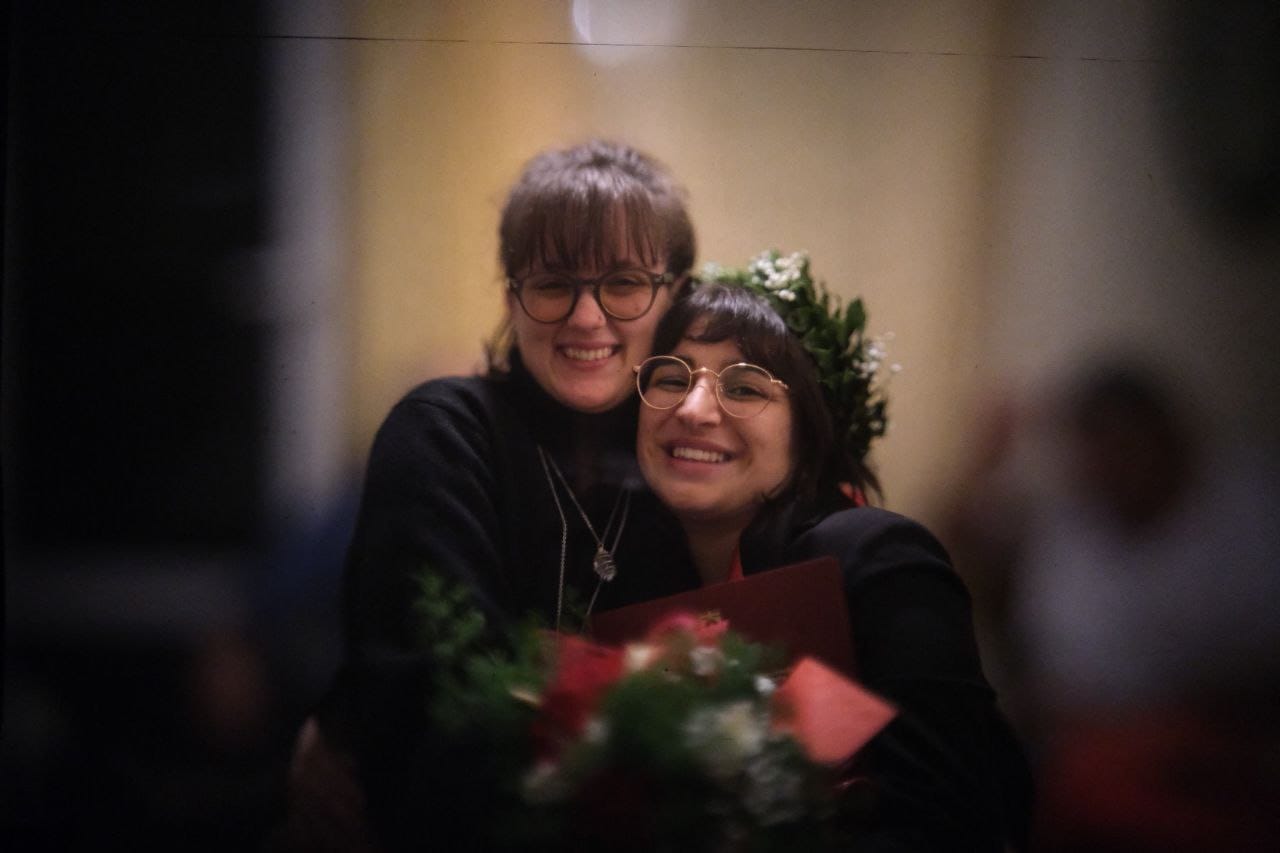
Now, there are a few details that should be improved in the next iteration of this system, which I've decided to call Lampone.
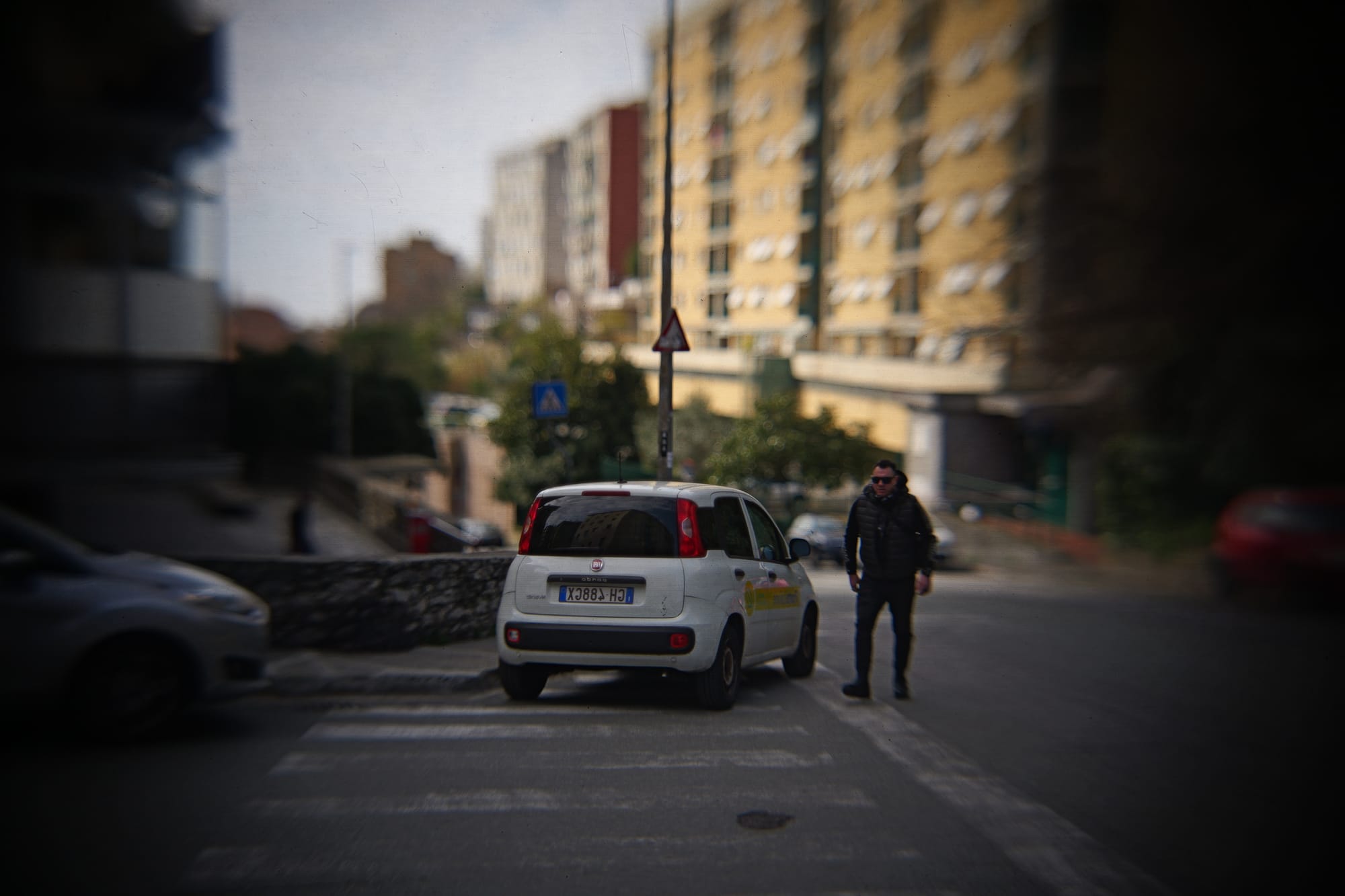
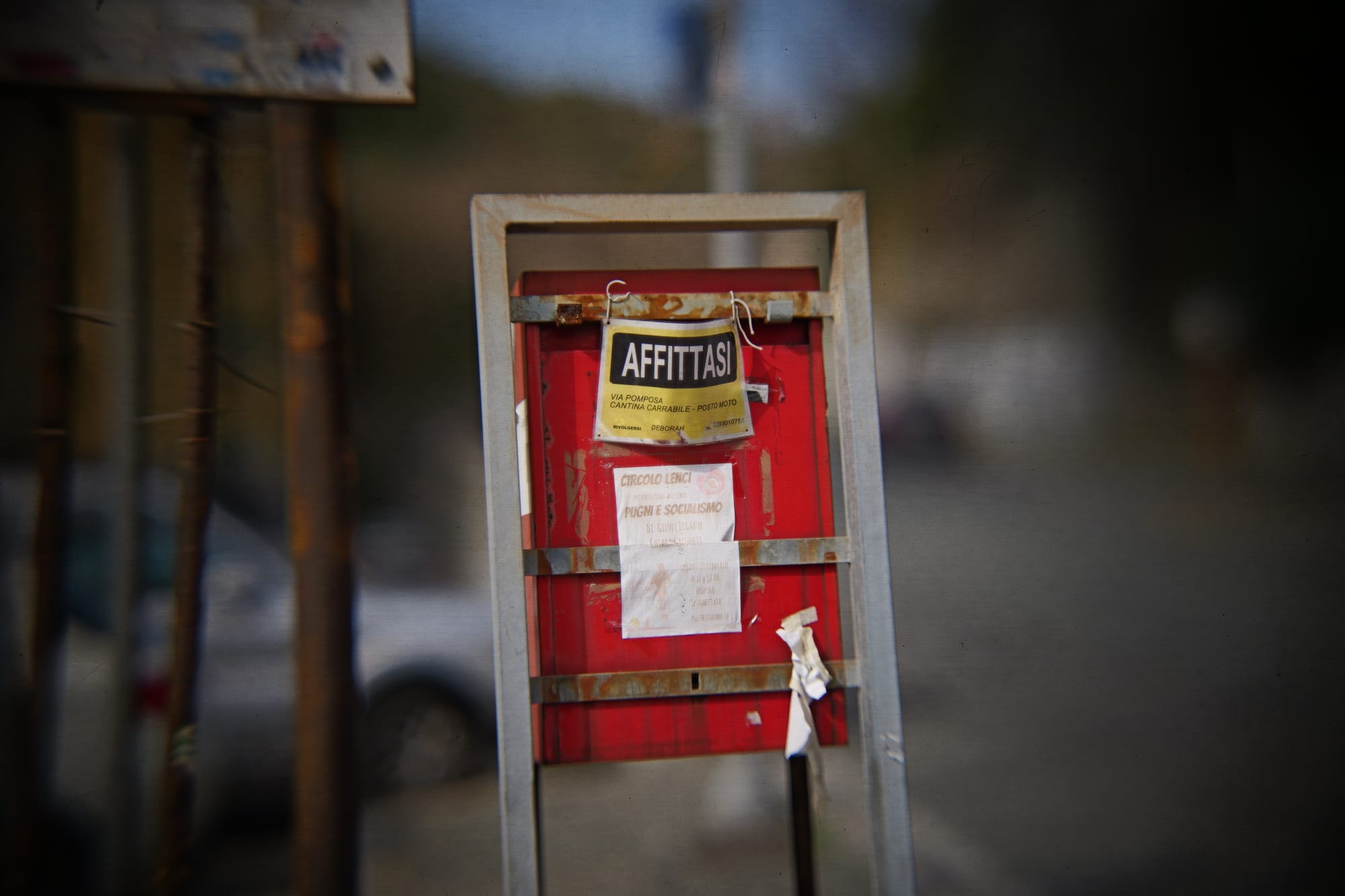
Firstly: I need to build a longer bellow and buy a longer rail. This would allow to keep the lens further away from the fake sensor, which would allow to focus on closer objects. Right now, the minimum focusing distance is awfully large.
Secondly: I should probably work on the structural integrity of it all. Any camera movement will generate weird wobblyness within the video too. Overall I thought it was reasonable and I've included a few pans in these scenes, but more stability would be beneficial.
Thirdly: you can definitively see the texture of the diffusion film, and even the pattern of the fresnel lens. You can fix the former by using better ground glass, and the latter by placing the fresnel lens further away from the diffusion film. There's also visible dirtness on the fake sensor; I didn't really care because I felt like it added to the image, but to get clean video you should be extremely careful when assembling this part.
Even if all of this was fixed, one remaining issue would be that this thing is huge. Not only it requires a large minimum focusing distance, but it's also 120cm long by itself, and it's pretty heavy too (my tripod could barely hold it). This is not a problem by itself, but it does mean that it's only possible to use it when there's enough room on set (and sometimes there just isn't).
Another intrinsic issue is that you are losing a lot of light by doing this. There's no way around it: scattering the light around in the fake sensor means less light reaching the actual camera lens. You should consider about a 3 stops light reduction compared to your taking lens, i.e. the lens that you use to photograph the fake sensor. That's a lot of light loss, sadly: scenes just have to be well lit.
Finally, I would like to thank the many people who posted details online about their builds. The video that inspired all of this is, of course, by DIY perks:
He named the build a "Next-Level Camera", so I decided to go with that name too. I think I went for a different enough approach that it justified its own video. There's also a great detailed video by Media Division:
I loved that they decided to include a second video for patrons with exact details for the components that they chose; it was really helpful when doing my design, though I eventually went with quite different takes.
And, finally, there's the F-Zero project too which tried to make this type of lens possible to be bought instead of just built at home:

I didn't quite have the budget for that, and I feel like I ended up with slightly better specs compared to the F-Zero, but the design by them is incredible and definitively an inspiration going forward.
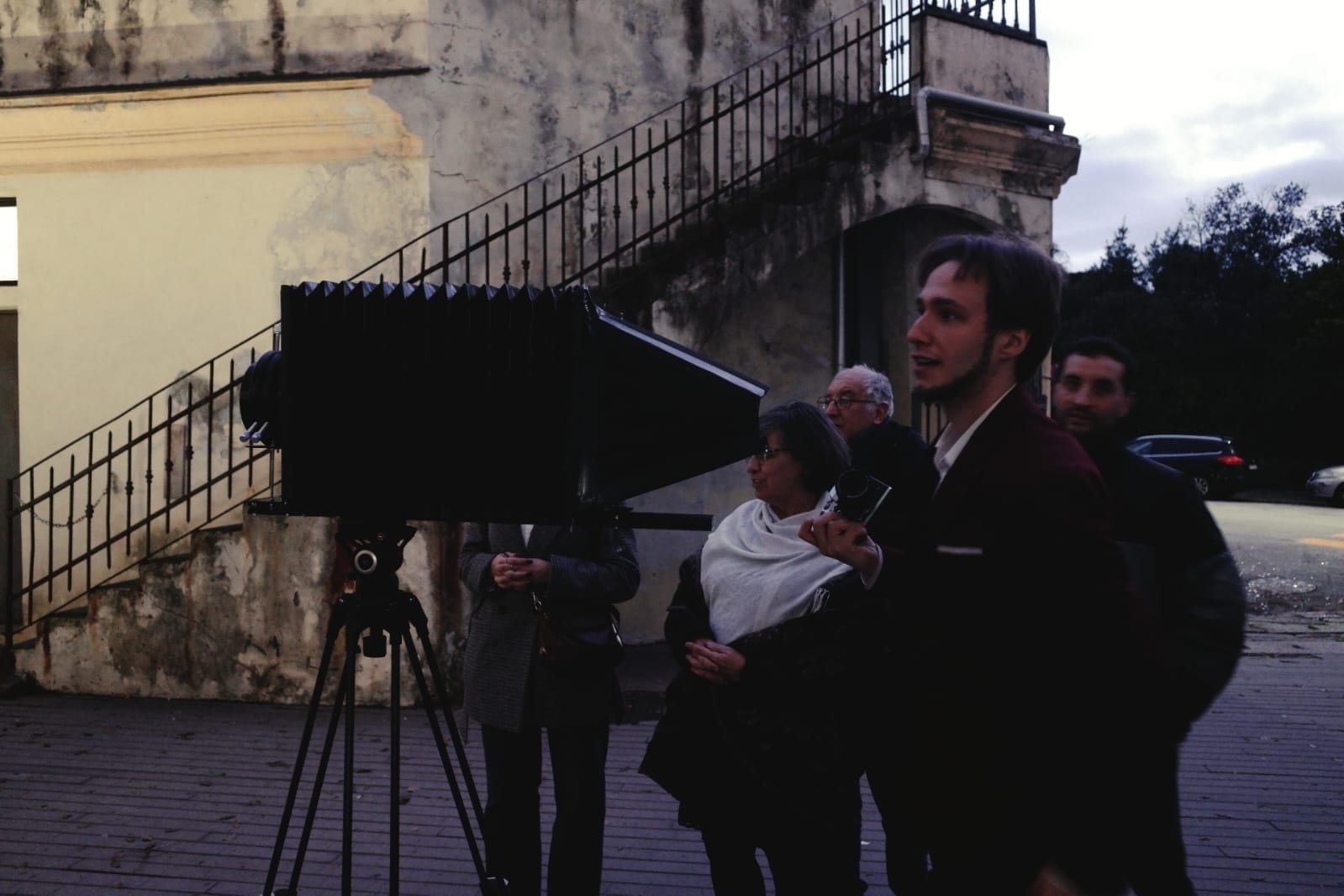
Anyhow, I will be using this again, and I loved the experience. If you want to watch the short film: thanks! It's still in post-prod., but it should come out in a couple months. Feel free to subscribe to this website and I'll post an article when it is out. Also, if you need to shoot something with this camera or want to play with it a bit, feel free to reach out.
We only run on donations. If you liked this piece, help us reach 300 subscriptions.
no ads · no trackers · cancel whenever